



Back-to-school season comes with a lot of pressure. Teachers are setting up classrooms, attending meetings, planning lessons, answering emails, and preparing to welcome a brand-new group of students.
You do not need every classroom system finished before the first bell rings.
Students need a welcoming start, clear routines, and time to practice how your classroom works. The rest can be added little by little.
These back to school tips for teachers are organized as a simple first-month roadmap. Start with the essentials, then build the rest as your students are ready.
This post contains affiliate links to Amazon for your convenience. As an Amazon Associate, I earn from qualifying purchases, which do not cost any extra for you. Please see the full disclosure here.
Your Back-to-School First-Month Roadmap
Hey there friend! 👋🏾 As you enjoy these back to school tips for teachers, keep in mind that I organized them based on when they will be most important for you to implement.
| Start Here: First 3 Days | Finish During Week 1 | Add During Weeks 2–3 | Build by Month’s End |
|---|---|---|---|
| Tips 1–5 | Tips 6–9 | Tips 10–13 | Tips 14–15 |
You do not need to complete all 15 tips at once for the first day. Start with what students (and you) need next. Enjoy ⬇️
Back to School Tips for Teachers to Have Ready for the First Day of School
1. Start With a Low-Stress Skills Refresh
Students often come back from summer with uneven recall of last year’s skills. Start with short review activities that help you see what students remember without making anyone feel behind.
Use warm-up questions, quick writing prompts, review pages, or simple math problems. Look for patterns instead of treating the work like a major assessment.
How this helps students: They rebuild confidence and reconnect with familiar skills before moving into new grade-level work.
My Summer Review Packets are a simple option for reviewing key Math and ELA skills in grades 2–6.


How can teachers find out what students remember after summer?
Use quick, low-pressure checks during the first week. A short writing sample, math warm-up, reading conference, or review page can tell you a lot without overwhelming students.
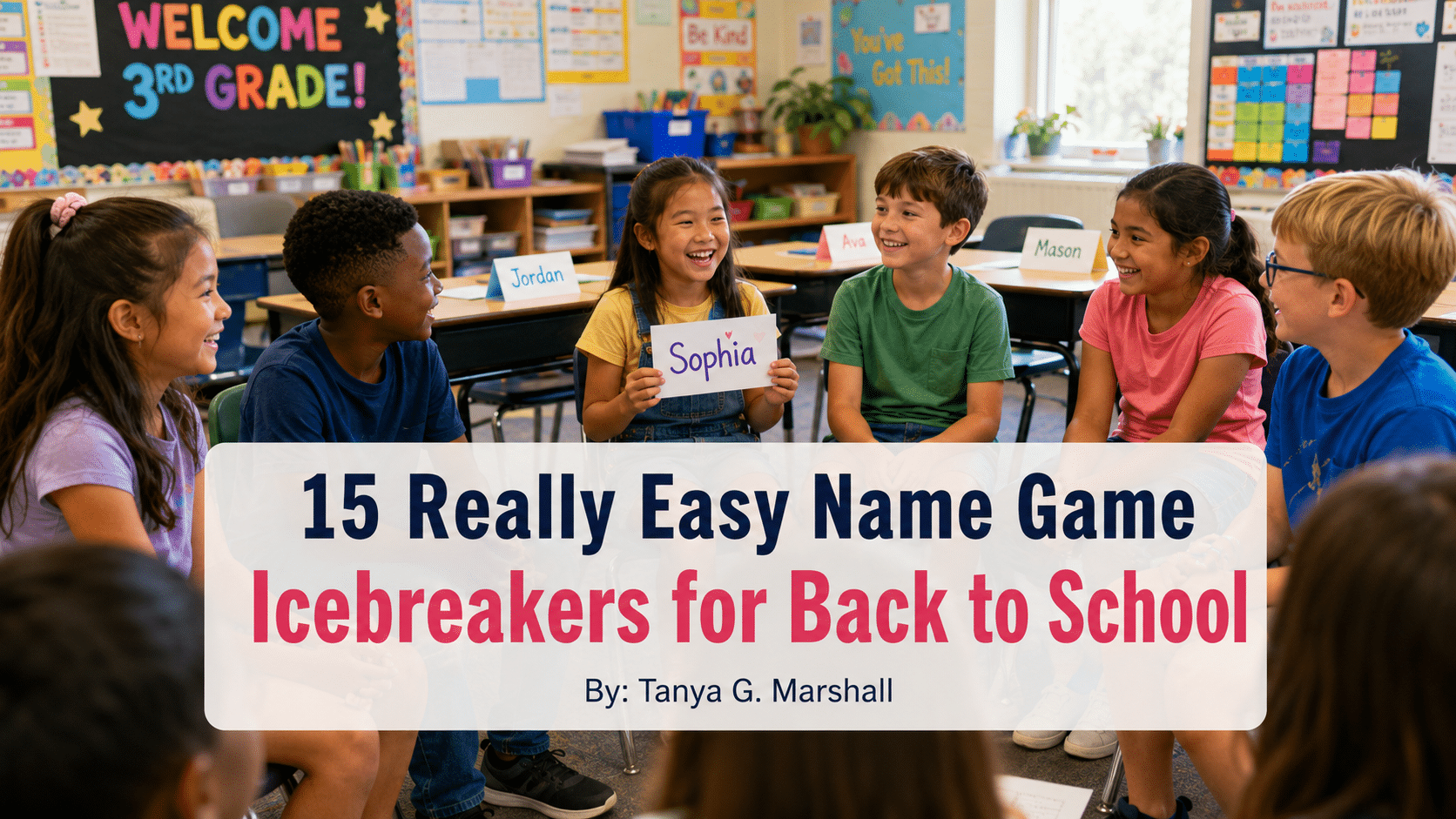
2. Learn Names and Build Belonging
Students need to feel known before they can fully settle into a new classroom. Here are some quick tips to remember:
- Learn how to pronounce every student’s name correctly.
- Greet students at the door.
- Use editable name tents, low-pressure conversation starters, or simple name games that do not put shy students on the spot.
How this helps students: Students feel welcomed, noticed, and more comfortable participating in class.
For more easy ideas, check out these fun ways to learn names quickly.
3. Post a Visual Daily Schedule
A visual schedule helps students know what is coming next. It does not have to be fancy. A simple list on the board, pocket chart, slideshow, or whiteboard works well.
Briefly review the schedule each morning. Let students know when something changes.
How this helps students: A predictable day helps students feel less uncertain in a new classroom.
4. Teach the Most Important Procedures First
Do not try to teach every procedure in one day. Start with the routines students will use again and again:
- Entering the room
- Morning work
- Getting supplies
- Pencil problems
- Bathroom and water
- Turning in work
- Asking for help
- Dismissal
Model each routine. Let students practice it. Then reteach it as needed.
How this helps students: Students learn how to handle everyday classroom tasks with less confusion and fewer interruptions.
Since establishing procedures and routines is so important, I have two different posts on ways you can do this easily for back to school. Check them out by clicking either image below.


5. Send One Simple Family Welcome Update
Choose the communication tool your school already approves. This may be Remind (which is what I used as a teacher for years), ParentSquare, ClassDojo (another system I used frequently), email, a learning platform, or another district-approved tool.
Send one short welcome message with important dates, classroom expectations, and one simple way families can support the first week.
How this helps students: Families know what to expect and can reinforce important routines at home.
Keep it manageable. A brief weekly update is enough. You can also draft messages ahead of time and use Gmail’s schedule-send feature so you are not sending school messages late at night.
What is the best app for teacher-parent communication?
The best choice is usually the tool your school or district already supports. A consistent system matters more than using the newest app.
Focus on These Tips During the Rest of Week 1
6. Teach Expectations Like a Lesson
Students need more than a posted list of classroom rules. Show them what expectations look like during real parts of the day.
Model how students should listen during a lesson, move during transitions, respond when someone else is speaking, and use materials respectfully. Then let them practice.
How this helps students: Students understand exactly what success looks like in your classroom.
7. Teach Students How to Work With Partners
Partner work sounds simple, but students need practice before it runs smoothly.
Show students how to take turns, listen without interrupting, share materials, disagree respectfully, and stay focused on the task. Start with short partner activities before expecting long group projects.
How this helps students: Students are more prepared for turn-and-talks, centers, discussions, and collaborative learning.
Grab these FREE Back to School Lesson Plans that help you plan the first FULL month of school!
8. Teach Students What to Do When They Feel Stuck
Students will feel confused, frustrated, or overwhelmed at some point during the first weeks of school. Teach them a simple classroom routine for those moments.
For example, during the first week with my kiddos, I would model for them how to:
- check a classroom resource or area first
- ask a partner
- raise their hand for me to come over
- use a teacher-approved quiet signal like thumbs-up or thumbs-down to let me know their understanding level
How this helps students: They learn to handle small challenges when things get crazy during those first few days of school.
I empathize with them; they’ve been out of the learning routine all summer and now they have so much information coming their way, which feels like drinking from a spewing fire hydrant! 😵💫
Teach them skills or provide a classroom management tool that helps know what to do when they’re stuck.

9. Build Independent Work Stamina
Independent work takes practice, especially at the beginning of the year.
Start with a short task students can complete successfully. Gradually increase the amount of time as students learn how to stay focused, use materials appropriately, and keep working when you are helping someone else.
How this helps students: Students become more confident working on their own while you meet with small groups or support classmates.
How long should independent work time be during the first week?
Start small. Even five to 10 focused minutes can be a strong beginning. Add a few minutes as students show they are ready.
Add These Back to School Tips During Weeks 2–3
10. Launch Centers Slowly
This is one of those back to school tips for teachers that I can’t stress enough. You do not need every center, station, or rotation ready during the first week. In fact, don’t pressure yourself to launch small group instruction for the first few weeks of school.

Introduce one center at a time. Start with modeling the procedures for centers first.
Give yourself time to see how your kiddos interact with one another.
This will help you better understand who should and should not be in learning groups together.
Teach students how to use the materials, work with partners, clean up, manage noise, and decide what to do when they finish.
How this helps students: Students can participate in centers with more confidence and less confusion.
For more step-by-step support, see my Launching Literacy Centers Guide.
When should teachers start centers or small groups?
Start when students understand your core routines well enough to work safely and independently for a short amount of time. For many classrooms, that may happen during the second or third week.
11. Teach Device and AI Expectations
Students need clear expectations before using Chromebooks, tablets, laptops, or classroom apps.
Teach students where devices belong, how they should be carried and charged, what to do when technology does not work, and when paper-and-pencil work may be the better choice. You can also explain your classroom expectations for AI tools in age-appropriate language.
How this helps students: Students learn to use technology responsibly instead of treating it like free time.
Keep the message simple: technology can support learning, but it does not replace students doing their own thinking.
12. Create an Early-Finisher Plan
Let’s address this right away: you WILL need some early finisher activities for back to school.
Schedules will change and plans will need back-ups. Trust me on this; in my full 13 years of teaching, I don’t think any first week schedule went perfectly!
But, students should also know what to do when they complete work early. Without a plan, they may interrupt you, distract classmates, or rush through assignments just to be finished.

Offer a few meaningful choices, such as independent reading, review practice, enrichment tasks, or quiet learning activities.
How this helps students: Students stay engaged and build independence instead of wondering, “What do I do now?”
My post on how to organize early finisher activities shares simple systems that reduce daily prep + ideas of what kinds of activities to have in place.
13. Help Students Find Books They Want to Read
A classroom library does not need to be perfect on Day 1. Start by helping students find a book they are excited to open.
Use a quick reading-interest survey, book tasting, read-aloud previews, or student book recommendations. Make sure students know how to choose, return, and care for books.
How this helps students: Students begin the year with reading materials that feel interesting and accessible.
Need ideas for building your library on a budget? Read these cheap ways to stock your classroom library.
How can teachers help students choose books at the beginning of the year?
Ask about favorite topics, hobbies, genres, series, and reading habits. A short conversation can help students find a book that feels like a good fit.
Build These Into Your Routine by the End of the First Month of School
14. Have a Clear Learning Road Map Ready
Students do not need to see your entire year-long plan during the first week. They do need to understand how learning will work in your classroom. But it sure will give you peace of mind when you have a clear learning road map ready for yourself.

Some parents may also want to know general information about what you will cover for the school year. This can be reviewed briefly at your open house event.
Knowing the overview of your school year also helps you plan in advance for field trips and future holiday class events.
Explain when students will work independently, meet in small groups, practice skills, complete review work, and ask for help.
If you need help creating the bigger picture, I have this practical guide on how to plan your school year without feeling overwhelmed.
15. Show Students That Mistakes Are Part of Learning
Students often begin the year nervous about getting answers wrong, especially when they are adjusting to new expectations and harder work.
Use low-pressure practice, revision opportunities, and encouraging language from the beginning. Let students know that mistakes give you useful information about what to practice next.
How this helps students: Students are more willing to try, ask questions, and keep going when work feels challenging.
How can teachers help students feel less nervous about a new school year?
Keep the first days low-pressure. Teach routines gradually, give students chances to succeed quickly, and remind them that nobody is expected to know everything on Day 1.
A Successful Start Does Not Have to Be Perfect
Back-to-school season does not have to mean doing everything at once.
Start with the first few routines that help students feel safe, welcomed, and clear about what to do. Then build your learning systems little by little as students are ready.
The goal is not a perfect first week. The goal is helping students feel prepared to learn, participate, and grow all year long.
For more classroom ideas, be sure to explore my FREE comprehensive Back to School Ideas for Teachers round-up that features everything you need for a great kick-off to the year!
