



Have you ever felt like the school day gets off track before you even finish attendance? 😅 Strong classroom routines and procedures can make the whole day run more smoothly, and honestly, they can save your sanity too.
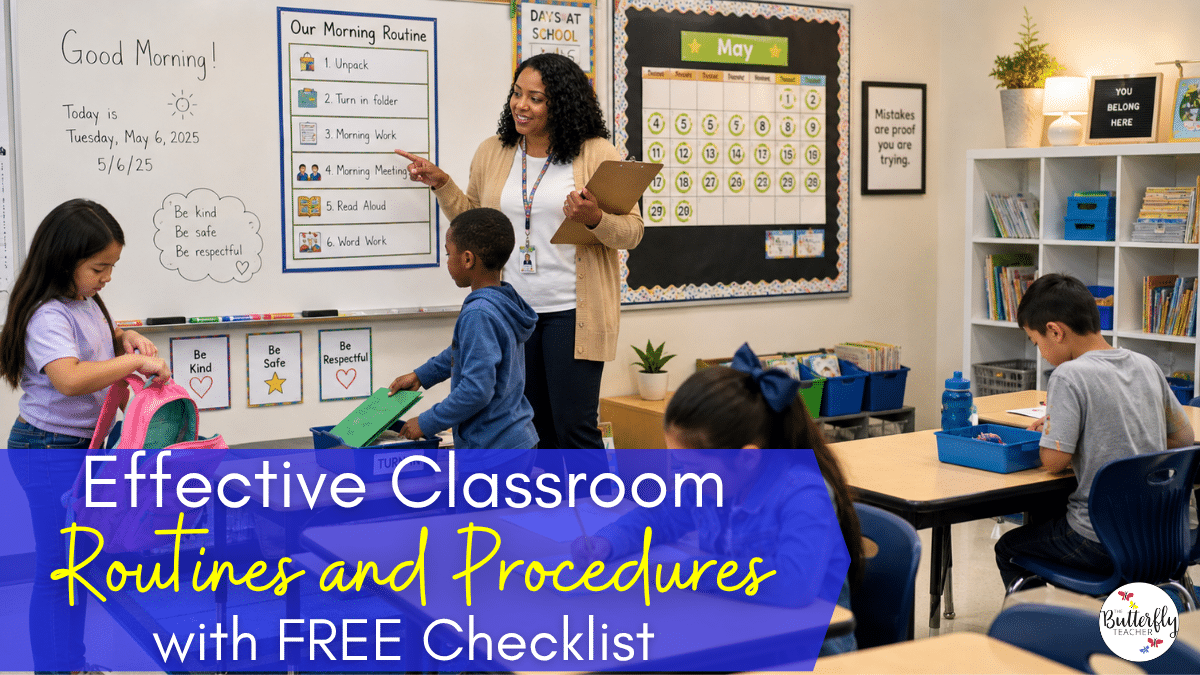
When students know exactly what to do, many behavior problems shrink fast. There is less confusion, less wandering, and a lot less repeating yourself. In this post, I’m walking through classroom routines in the same order students experience them during the day, from morning arrival to dismissal.
I’m also sharing a FREE checklist you can use with your students to establish healthy routines.
This post contains affiliate links to Amazon for your convenience. As an Amazon Associate, I earn from qualifying purchases, which do not cost any extra for you. Please see the full disclosures here.
Why Classroom Routines and Procedures Matter
Classroom routines and procedures matter because they remove guesswork. Students do better when they know what to expect and how to move through the day.
Well-taught routines help:
- Students know what to expect
- Cut down on confusion and off-task behavior
- Save teaching time
- Build student independence
- Make classroom management feel less exhausting
When I taught 2nd and 4th grade, I learned pretty quickly that most “behavior issues” were really routine issues. If students were unclear about how to transition, turn in work, or ask for help, little problems popped up everywhere. Clear systems create calmer classrooms.

I learned SO much about setting up effective procedures using this book. It became like my “teaching Bible,” and I highly recommend it. Click the image for your copy.
What Is the Difference Between Routines and Procedures?
The short answer is this: routines are the repeated parts of the day, and procedures are the steps students follow during those parts.
If you have ever wondered, “what is classroom routines?” think of routines as the predictable structures in your schedule:
- Morning arrival
- Independent work
- Small groups
- Dismissal
Procedures are the specific directions for what students do during those times. Some examples of classroom procedures include:
- How to enter the room quietly
- Where to place homework
- How to ask to use the restroom
- What to do when finished with an assignment
Both classroom routines and procedure work together to create a smoother, more predictable day.
Morning Classroom Routines and Procedures
Entering the Classroom
Teach students how to enter calmly and what to do immediately. Do not leave morning entry up to chance.
- Model how students walk in
- Show where they go first
- Explain what they should have in their hands
- Be clear about what they should not do, like stopping to chat or wandering
In my coaching work with teachers, morning entry is often one of the first routines we tighten up because it sets the tone for everything else. I learned this the hard way in my first year of teaching; now I preach having a smooth morning routine because it helps you start the day effectively.
Unpacking Supplies and Backpacks

I assigned each students a number, usually based on the alphabetical roster, and their number became the system I used for things like folders, their book bag hooks, and their mailbox cubbies.
Students need a simple system for where backpacks, folders, lunchboxes, and supplies belong. The easier this routine is, the less hectic your mornings feel.
- Assign one clear place for each item
- Use labels or visuals if needed
- Practice the route from door to desk to supply area
Trust me, don’t assume that something as simple as where to hang your book bag is a routine that students will just instinctively know how to do.
You must model and train your kiddos on anything that they need to do daily. This will keep common activities from spiraling out of control.
Morning Work or Bell Work
Students should know what to work on right away. This could be morning tubs, a spiral review page, a journal prompt, or a quick SEL check-in.
A solid morning work routine helps:
- Set a calm tone
- Reduce social chaos
- Give you time for attendance and quick check-ins
Turning In Homework or Papers

Teach where papers go and when students should turn them in. Keep it the same every day.
- Use one turn-in tray or subject bins
- Tell students whether they turn work in during arrival or after morning work
- Avoid changing the system often
I kept a mailbox system near my teacher assistant’s area so that she could help monitor this routine in the morning while I stayed at the door to greet students.
The colorful papers in the image represented their center group color and was a part of the system we used for when students would go to the mailbox.
For example, I would say “Group Orange, go check your mailbox.” That ensured only 3 or 4 students at a time were at the mailbox.
Mid-Morning Classroom Routines and Procedures
Asking to Use the Restroom
Students need a clear, consistent restroom procedure. Explain how they ask and when it is or is not a good time.
- Use a hand signal, pass, or sign-out sheet
- Teach “not now” moments, like during direct instruction
- Review expectations for returning quickly and quietly
Getting Pencils, Materials, or Classroom Supplies
Students should be able to get basic supplies without stopping instruction. Especially for something very common like getting a sharpened pencil.
- Keep extra pencils and materials in one spot
- Teach students how to replace what they borrow
- Show when they can get supplies independently
When I taught upper elementary, I loved having a “grab-and-go” supply station. It cut down on interruptions so much. I also taught my student helpers to know what to do in helping their classmates get supplies.
Getting the Teacher’s Attention the Right Way

Instead of letting them blurt out, teach students exactly what to do when they need help.
And be prepared to model and practice this procedure with them multiple times for the first weeks of school until your expectation becomes their habit.
- Raise a hand
- Use a quiet desk signal
- Place a two-sided help card on the corner of the desk
- Ask a designated partner first
Practice attention signals too. Do not assume students automatically know how to get help appropriately.
Transitioning Between Subjects
Transitions should be quick and calm, not loud and messy. Teach students how to clean up, put away materials, and move into the next subject.
| Transition Step | What Students Do | Teacher Tip |
|---|---|---|
| Clean up | Put materials in assigned spots | Use a timer or song for efficiency |
| Reset desk/space | Clear off unneeded items | Model what “ready” looks like |
| Get new materials | Gather only what is needed | Assign supply helpers if needed |
| Move attention | Track teacher and wait quietly | Use the same cue every time |
Afternoon Classroom Routines and Procedures
Moving to Small Group or Centers
Students should know where to go, what to bring, and how to move without chaos. This is one of the biggest game-changers for upper elementary.
- Post center rotations clearly
- Teach what materials come with them
- Practice walking routes and voice levels
If you use centers often, this is also a great spot to support routines with visual rotation cards or center management tools from your shop.


I go into more details about different procedures + organization tips with these centers posts. Click either image for more details.
Lining Up for Lunch, Recess, Specials, or Dismissal
Model how to line up instead of just telling students to do it.
- Teach voice level
- Show spacing
- Explain what students do while waiting
- Practice turning and facing forward
Packing Up at the End of the Day
Students need to know when to begin packing up and exactly what goes home.
- Set a consistent pack-up time
- Show what goes in backpacks
- Clarify what stays at school
- Use a checklist like this FREE one ⬇️

Dismissal Routine
Dismissal should feel organized and predictable for safety and sanity.
- Teach how students leave the room
- Review transportation procedures
- Explain where students wait if plans change
- Never rush teaching this routine
How to Teach Classroom Routines and Procedures So They Stick
The best routines are taught on purpose. You cannot just explain them once and hope for the best.
- Model the routine step by step
- Practice it more than once
- Let students try it the right way
- Correct mistakes right away
- Revisit routines as needed
If you want fun ways to teach classroom procedures, try:
- Role-playing the right way and the wrong way 😊
- Using a timer and making transitions a class challenge
- Taking photos of students modeling expectations
- Creating simple anchor charts together

Classroom Routines and Procedures That Actually Get Results
Effective classroom routines and procedures are clear, simple, and practiced consistently.
- Keep directions short and clear
- Do not assume students already know what to do
- Practice routines during the first days and weeks of school
- Be consistent with expectations
- Reinforce routines before problem times, not just after mistakes happen
You can make huge progress just by simplifying directions and practicing one sticky routine each day for a week. This is something else I learned from the Harry Wong classroom management approach with procedures and routines.
Examples of Classroom Procedures Teachers Should Teach Early
Some procedures need to be taught immediately because they shape the flow of the whole day. These examples of classroom procedures are worth teaching early and revisiting often.
| Procedure | What to Teach | Why It Matters |
|---|---|---|
| Entering the room | Where to go, what to do first, voice level | Sets the tone for the day |
| Finished with work | Where to place work and what to do next | Prevents interruptions |
| Partner work | How to take turns, share materials, use voices | Supports productive collaboration |
| Independent work | What to do if stuck, noise level, stamina | Builds self-management |
| Sharpening pencils/getting supplies | When and how to get materials | Reduces disruptions |
| Transitions | Clean up, move, reset, focus | Keeps instruction moving |
Rules and Routines in the Classroom: How They Work Together
Rules tell students the expectation. Routines and procedures show them how to meet that expectation.
For example, one of your rules and routines in the classroom might connect like this:
- Rule: Be respectful
- Procedure: Enter quietly, listen during instruction, and wait your turn to speak
Rules set the standard, but routines make the standard doable.
Several of the hacks in this teacher video address teaching classroom routines and procedures. Enjoy each quick teacher tip! 💡
Common Mistakes Teachers Make With Class Routines
Even strong teachers can struggle with class routines when the year gets busy. The good news? Most routine problems are fixable.
- Teaching too many at once
- Explaining without practicing
- Changing systems too often
- Assuming upper elementary students do not need modeling
- Waiting until students make mistakes to clarify expectations
One midyear reset can make a huge difference. I’ve even created classroom management and back-to-school resources over the years because teachers kept asking for tools that made reteaching easier and less overwhelming.
Free Classroom Routines and Procedures Checklist
I created this checklist as a simple tool teachers can print and use with their students. It helps you think through your students’ entrance and exit procedures. How do you want them to enter and get set up for the day, but also how do you want dismissal to flow?

This checklist is especially helpful for:
- Back-to-school planning
- Classroom reset time
- Midyear behavior refreshers
Sometimes you do not need a brand-new management system. You just need a clear list of routines to reteach. That is exactly why this free resource is so helpful.
What are the most important classroom routines and procedures?
The most important routines are the ones students use every single day. Focus first on morning entry, turning in work, restroom use, supply routines, transitions, and dismissal. If those are smooth, the rest of the day becomes much easier to manage and teach.
How long should I spend teaching classroom routines?
Spend extra time up front so you save time later. Strong classroom routines usually need explicit teaching during the first days and weeks of school. You will also want to revisit them after breaks, during a midyear reset, or anytime the class starts slipping.
Do upper elementary students still need routines taught explicitly?
Yes, absolutely. Older elementary students still need modeling, practice, and reminders. They may learn quickly, but they still need to be shown exactly what success looks like. Never assume 4th or 5th graders automatically know your specific systems and expectations.
What are examples of classroom procedures?
Examples of classroom procedures include concrete, step-by-step actions. That might mean entering the room, asking for help, moving to centers, packing up at the end of the day, or getting supplies. Good procedures are specific enough that students can follow them independently.
Why are classroom routines important?
Classroom routines are important because they reduce confusion and support independence. They also improve classroom behavior and make the day run more smoothly. When students know what to do, you spend less time correcting and more time teaching.
Upper Elementary Classroom Routines and Procedures
Teacher friend, you do not need dozens of complicated systems to have a well-run classroom. You just need a few strong routines that you can teach, practice, and maintain consistently.
The best classroom routines and procedures are the ones that fit your teaching style and support the natural flow of your day. Start with the routines that matter most: arrival, work time, transitions, and dismissal. Then build from there. 🌟
And if you want procedures specific to 3rd, 4th and 5th Grade, check out these tips: ⬇️


2 Responses
I’ve searched every where for your fuzzy friend notes with all the grammatical errors (set of task cards) for classroom procedures and was wondering if you could tell me where to go to find them?
Hi Lois,
Here you go: https://thebutterflyteacher.com/product/back-to-school-task-cards-how-to-introduce-back-to-school-procedures/
Thanks so much for asking. 🙂
Tanya