



Do you ever look out at a room full of brand-new faces on the first day of school and think, “How am I going to learn all of these names?”
You are not alone. The first few days are full of schedules, supplies, procedures, and lots of students who may feel excited, nervous, shy, or all three at once.
That is why I love using simple name games during back-to-school season. The right activity helps students learn each other’s names, gives you repeated name practice, and starts building a classroom community without putting every child on the spot.
Below are 15 really easy back-to-school name games you can use with elementary and middle school students.
This post contains affiliate links to Amazon for your convenience. As an Amazon Associate, I earn from qualifying purchases, which do not cost any extra for you. Please see the full disclosure here.
What are the best name games for elementary students?
The best name games for kids are simple, structured, and give students several chances to hear and use classmates’ names.
Choose activities that feel safe and manageable instead of forcing students to perform in front of the class.
When I taught 4th grade, I learned quickly that the best name game icebreaker was not always the loudest or most elaborate one. Students usually just need a low-pressure reason to look around the room, say a few names, and begin feeling like they belong.
For the first day, I recommend starting with a short whole-group game, then using a quieter activity such as a desk name tent or name acrostic poem. That balance helps students connect while still giving everyone room to warm up.
How do I help students learn each other’s names quickly?
Students learn names faster when they see, hear, say, and write them more than once.
Keep name tents on desks, use partner games, call students by name whenever possible, and revisit one or two quick activities each day.
And don’t hesitate to even bust out the trusty ole’ sticky name tags. Have students decorate them, then use a name clip for them to wear during the first week of school.
The goal is not one big icebreaker; it is repeated name practice across the first week of school.
A few minutes or few name games of intentional practice can make a big difference.
What are easy name game icebreakers for shy students?
Quiet name games work especially well for shy students because they can participate without having to speak alone in front of the whole class. Desk name tents, name acrostic poems, matching games, and class wide guessing activities are great low-pressure choices.
Students can still build familiarity with classmates’ names while working independently, moving in pairs, or responding as part of a group.
What are good name icebreakers for large groups?
For large groups, choose games that have clear turns, simple directions, and limited waiting time. Name Echo, Name Pass, Name Pattern Clap, and Name Alphabet Line-Up work well because everyone hears several names without needing lots of supplies.
You can also split a large class into smaller circles or teams for activities such as Name Chain and Name Switch.
Quick Whole-Class Name Games
These fun name games are easy to explain and work well during morning meeting, after recess, or anytime you need a quick back-to-school reset.
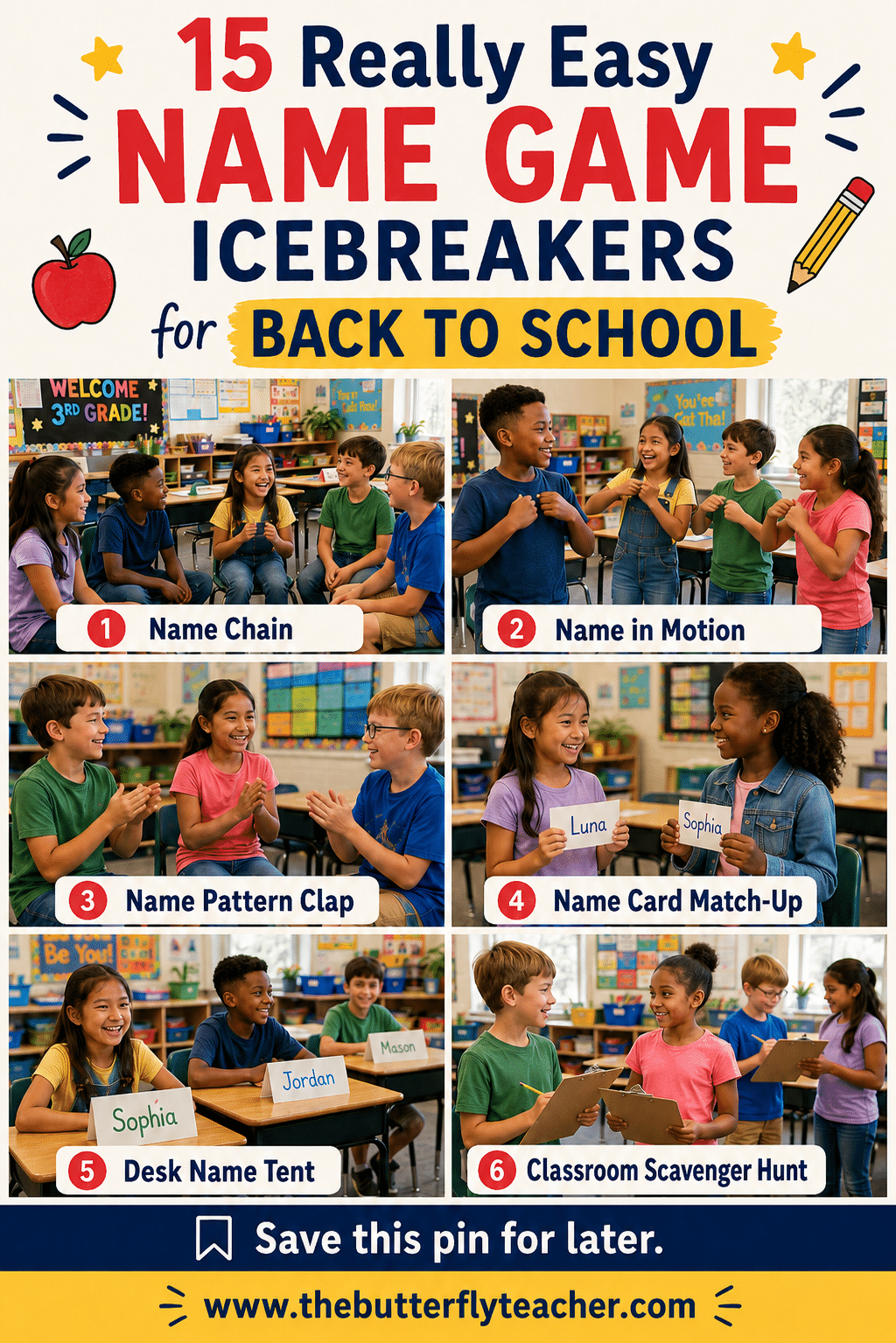
1. The Name Chain
Students sit or stand in a circle. The first student says their name. The next student repeats that name and adds their own. The pattern continues around the circle.
For example:
“This is Ava. I’m Marcus.”
“This is Ava. This is Marcus. I’m Jayden.”
Let the class help when someone forgets a name. The goal is teamwork, not perfect memory on the first try.
2. Name in Motion
Each student says their name and adds a simple motion, such as a wave, clap, thumbs-up, shoulder shimmy, or small dance move.
The class repeats the student’s name and motion together.
This name game icebreaker is especially fun for younger students, but upper elementary students usually enjoy it too when you keep the motions quick and low-key.
3. Alliterative Name Introductions
This is one of my personal favorites as an ELA teacher! Students pair their name with a positive adjective that begins with the same letter or sound.
Examples include:
- Creative Caleb
- Joyful Jasmine
- Mighty Mya
- Brilliant Bryce
Students can say their phrase aloud, write it on a desk name tent, or let a partner read it. The adjective gives classmates an extra memory hook.

The Name Jar written by Yangsook Choi is an excellent back to school read-aloud you can use with any of your name game activities.
4. Name Echo
One student says their name clearly. The class repeats it back together.
You can make it more playful by asking students to echo the name in a robot voice, whisper voice, cheering voice, or opera voice. Keep it short so the focus stays on remembering names instead of getting too silly.
5. Name, Favorite, Repeat
Students say their name and share one simple favorite, such as a favorite snack, color, animal, book genre, or school subject.
The next student repeats the previous student’s name and favorite before adding their own.
For example:
“This is Nia. She loves tacos. I’m Elijah, and I like drawing.”
Choose prompts that are easy and classroom-safe. Students should never feel pressured to share anything personal.
Follow me on Pinterest here.
6. Name Pass
Students sit in a circle. One student points to a classmate and says, “Good morning, Kayla.”
Kayla replies, “Good morning, Isaiah,” then chooses the next classmate.
This is calmer than tossing a ball, and it helps everyone hear names in a respectful, friendly routine. You can use it again later in the week as a quick greeting activity.
7. Name Pattern Clap
This was a great game when I started as a new 2nd grade teacher. Not only is it a fun way to learn names, but it also helps you to see which kids already know how to count syllables.
Students clap the syllables in a classmate’s name while saying it together.
For example:
- “El-i-jah!”
- “Sa-man-tha!”
- “Jo-seph!”
Your kiddos can respond with a wave, thumbs-up, or simple motion. This is a fun way to practice name pronunciation and help students listen closely.
8. Name Switch
Students sit in a circle with one person standing in the middle. A student calls out the name of someone in the circle. That student quickly switches places with another classmate before the person in the middle finds an open seat.
This works best after students have practiced names through a few quieter games first. Review safe movement expectations before you begin.
Easy Partner and Movement Name Games
These ice breaker games to learn names give students a reason to interact, but they still provide structure so nobody has to figure out what to say on their own.
9. Name Alphabet Line-Up
Challenge students to line up in alphabetical order by first name.
For a quieter version, students can hold their desk name tent, write their first name on a whiteboard, or point to their first initial. Once they are in line, have students read the names of the classmates beside them.
This is a great option for name icebreakers for large groups because it gets students moving while keeping the task focused.
10. Name Card Match-Up
For this activity, have your students write their name on an index card, then you collect them and put them in a name jar. Students draw a card, find that classmate, and introduce themselves.
You can give them a simple sentence frame:
“Hi, are you ___? My name is ___.”
After they find their match, partners can share one favorite thing or answer a quick question. Then collect, shuffle, and redistribute the cards for another round.
11. Find Someone Who
If you want some fun name games, this one will be a hit! I’ve heard some teachers call it, “Find a Friend Who…” but it’s the same concept.
Give students a few simple prompts, such as:
- Find someone who likes to read.
- Find someone who has a pet.
- Find someone who enjoys art.
- Find someone who likes pizza.
Students find a classmate who matches the prompt, ask for their name, and write it down. Encourage them to say, “Nice to meet you, ___,” before moving on.
This keeps the focus on names, not just random facts.
12. Classroom Scavenger Hunt
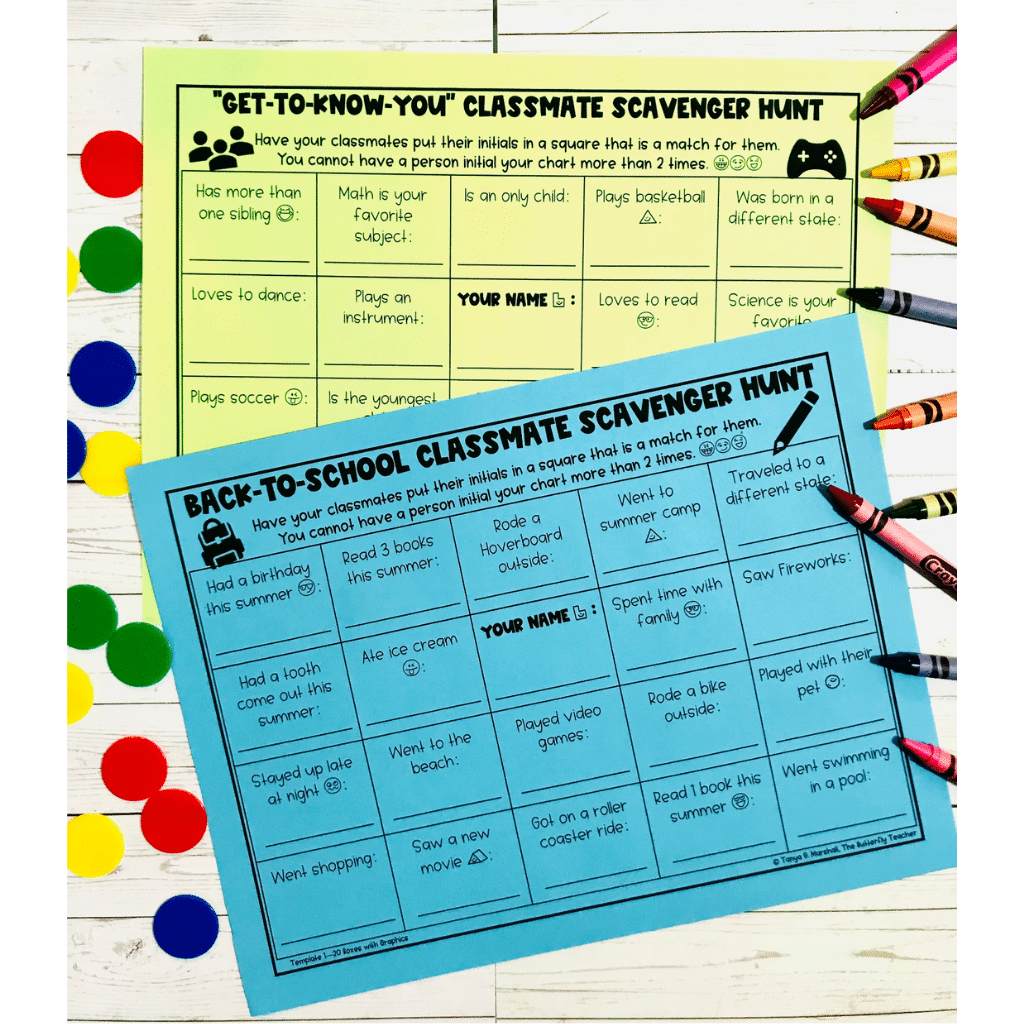
This one is definitely my favorite!
A classroom scavenger hunt gives students a little more movement and conversation while helping them meet classmates beyond their usual friend group.
Classmate Scavenger Hunts are a great fit to learn names quickly because students can walk, talk, gather signatures or initials, and learn more about classmates in a structured way.
This activity works especially well after students have had a few days to be around each other, but they need a refresher on remembering names.
Quiet and Low-Pressure Name Activities
Not every student is ready for lots of talking, moving, or sharing on the first day. These back-to-school name games give students a gentler way to participate.
13. Desk Name Tents
Desk name tents are one of the easiest ways to help everyone learn names during the first week of school.
Students can write their preferred name, add a self-portrait or symbol, and include a favorite thing such as a sport, animal, color, or hobby. Then keep the tents on desks for several days.
These editable Back-to-School Name Tent template makes this easy to implement while still giving students room to personalize their tent.
Try a quiet gallery walk where students look at three classmates’ tents and write down each person’s name plus one symbol they noticed.


14. Teacher Test: Can You Name Us?
This one puts the pressure on the teacher instead of the students!
After students have used their name tents for a day or two, ask them to fold the tents down.
Point to a few students and try to remember their names.
Students will love cheering when you get it right, and they can kindly help when you need a reminder. It shows students that learning their names matters to you.
15. Name Acrostic Poems
Give students a simple acrostic poem page using the letters in their name.
For example, a student named MAYA might write:
M — Makes people smile
A — Always enjoys art
Y — Yellow is my favorite color
A — Appreciates animals
Students can keep the poems at their desks, add them to a class display, or share them later in pairs. This is a meaningful option for students who would rather write than speak right away.
How to Choose the Right Name Game
The best name game for your class depends on your students, your time, and the energy in the room that day.
| When You Need… | Try This Name Game |
|---|---|
| A quick five-minute activity | Name Echo, Name Pass, or Name Pattern Clap |
| A fun whole-class icebreaker | Name Chain, Name in Motion, or Name Switch |
| An ELA-friendly option | Alliterative Name Introductions or Name Acrostic Poems |
| A quiet choice for shy students | Desk Name Tent, Teacher Test, or Name Acrostic Poems |
| A movement activity | Name Alphabet Line-Up, Find Someone Who, or Classroom Scavenger Hunt |
| A partner activity with sentence support | Name Card Match-Up |
| Help learning names over several days | Desk Name Tents plus Teacher Test: Can You Name Us? |
You do not need to use all 15 name games in one week. Pick two or three that fit your class, then repeat them in short bursts throughout the first few days.
A Simple Way to Make Name Games Work Better
Before you start, give students permission to share the name they prefer to be called and the correct pronunciation. That small step matters.
Also, keep the tone light. The first day of school is not the time to make students give long speeches or share deeply personal information. A simple name, a favorite snack, a small motion, or a symbol on a name tent is plenty.
In my coaching work with teachers, I often remind them that classroom community grows through small repeated moments, not one big magical activity. Learning names is one of the first ways students begin to feel seen.
More Back-to-School Icebreaker Ideas
These name games are a great starting point, but they are only one piece of helping students feel comfortable in a new classroom.
Once your students know a few names, you can keep the connection going with more low-prep activities that build trust, laughter, and classroom community.
For more easy ideas, head over these posts:
15 Fun and Easy Ice Breakers for Teachers
Back-to-School Activities for Upper Elementary Classrooms (Get FREE Back to School Lesson Plans!)
First Week of School Ideas for Elementary Teachers
Which name game would your students enjoy most? Leave a comment and share your favorite first-week activity! 💛
