



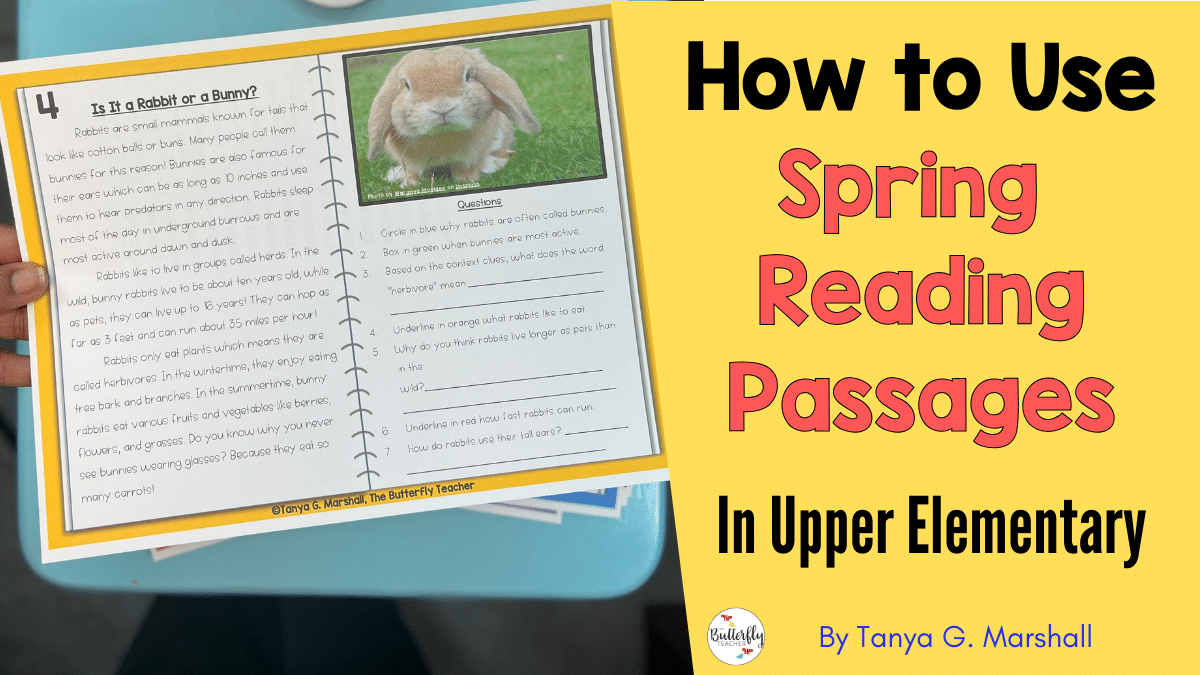
Using spring reading comprehension passages and questions can be a simple way to keep students practicing important reading skills during the busy spring months. 🌷
By March, many teachers notice that student focus starts to shift as warmer weather, testing season, and end-of-year excitement kick in. When I taught 4th grade, I found that short, engaging reading passages helped my students stay consistent with reading practice without feeling overwhelmed.
In this post, I’m sharing practical ways to use spring reading passages for morning work, reading centers, and quick comprehension practice so students continue strengthening skills like context clues, text evidence, and reading comprehension.
This post contains ads as well as some affiliate links to Amazon for your convenience. As an Amazon Associate, I earn from qualifying purchases, which do not cost any extra for you.
Please see the full disclosure here.
Spring in the classroom is… an interesting time. 🌸
It may be an understatement to say that kids definitely have Spring Fever. 😵💫
That means it’s time to whip out some short spring reading comprehension passages and questions. These quick-read activities always gave my students consistent reading practice while keeping routines predictable and manageable.
Short spring reading passages are perfect for:
- morning work
- reading centers
- quick comprehension practice
- spring break reading packets
- early finishers
- reading sub plans
- test prep warm-ups
That’s why I’m excited to share practical ways you can use spring reading comprehension passages and informational text passages to keep students engaged and building critical skills like context clues, text evidence, and reading comprehension.
How to Use Spring Reading Passages for Morning Work
Morning work can set the tone for your entire day.
One thing I learned teaching upper elementary is that students thrive when morning routines are predictable but meaningful. Instead of worksheets that feel like busy work, short reading comprehension passages give students real reading practice first thing in the morning.
These quick-reads should only take about 10–15 minutes, but the packed in several reading skills.
Easy Morning Work Reading Routine
Here’s a simple structure teachers can use ⬇️:
1. Students read a short passage independently
Topics related to spring work really well during March–May because they feel timely and interesting.
Examples might include:
- pollinators and bees
- spring weather patterns
- plant growth
- Earth Day topics

Passages that students color-code makes reading engaging! Click the image to see this set.
2. Then your students answer comprehension questions related to the passage
These questions can focus on:
- context clues
- text evidence
- main idea
- inferences
3. Quick partner discussion
After students finish, they turn and talk with a partner to compare answers.
Classroom Morning Work Tips
To make reading morning work more interactive and easy:
- Put the reading passages on students’ desks before they come to class
- Have students highlight or underline text evidence
- Use color coding for answers
- Ask students to circle unfamiliar vocabulary
- Let partners explain their thinking
In my coaching work with teachers, I often recommend using spring reading comprehension passages and questions for morning work because they’re structured, purposeful, and easy to manage.
How to Use Spring Passages in Reading Centers
Reading centers are another perfect place to use spring reading passages to keep your kiddos engaged with learning during these busy months.
Short informational text passages allow students to practice comprehension skills independently while you work with small groups.
Spring Reading Center Ideas
Here are a few easy ways to structure a reading center with passages.
Context Clues Station
Students:
- read a short passage
- identify unfamiliar words
- use context clues to determine meaning
This works especially well with nonfiction passages because students encounter new academic vocabulary.

Click the image to use these close read passages in your classroom.
Text Evidence Center
Students practice finding proof in the text. At this center, 3rd through 5th grade students:
- read a short passage
- answer comprehension questions
- highlight the exact sentence that supports their answer
- explain how the evidence proves their thinking
This type of activity strengthens one of the most important upper elementary reading skills: using text evidence to support answers.
You can also connect this center to teaching nonfiction text features, which is a skill students need for informational reading. Many informational text passages include features like headings, bold words, captions, or diagrams. At this station, students can practice using those features to help locate information more efficiently.
For example, students might use a heading to predict what a section will explain or read a caption under an image to gather additional details that support their answer. When students learn to combine text evidence with nonfiction text features, they become much stronger readers of informational text—especially the types of passages they’ll see on state tests.
Making Inferences Practice Center
I absolutely love teaching the skill of making inferences with reading! For this spring reading idea, your students read the passage and answer questions that require deeper thinking, such as:
- What can you infer about the author’s message?
- What might happen next?
What makes it even more fun is when you use seasonal inferencing riddles alongside your spring passages. That way, kids get a double dose of 1️⃣ practice making inferences with a funny, short riddle and then 2️⃣ leveling up that skill again but this time with a slightly longer passage.


Comprehension Questions Station
This reading station gives students focused practice applying reading strategies to a short passage. Instead of simply answering questions, the goal is to help students think carefully about how they find and explain information in the text.
At this center, students might:
- read a short informational passage independently
- respond to a mix of question types such as multiple choice, short response, or evidence-based questions
- explain their thinking in one or two sentences
- compare answers with a partner and discuss how they found their answers

Click the image to use these spring reading passages in your class.
One thing I learned teaching upper elementary ELA is that comprehension improves when students learn how to navigate informational text efficiently. This station is a great opportunity to reinforce how nonfiction text features help readers locate important details.
How to Make Spring Reading Passages More Engaging
Sometimes teachers worry that reading comprehension passages might feel boring to students.
But with a few simple strategies, they can become really engaging.
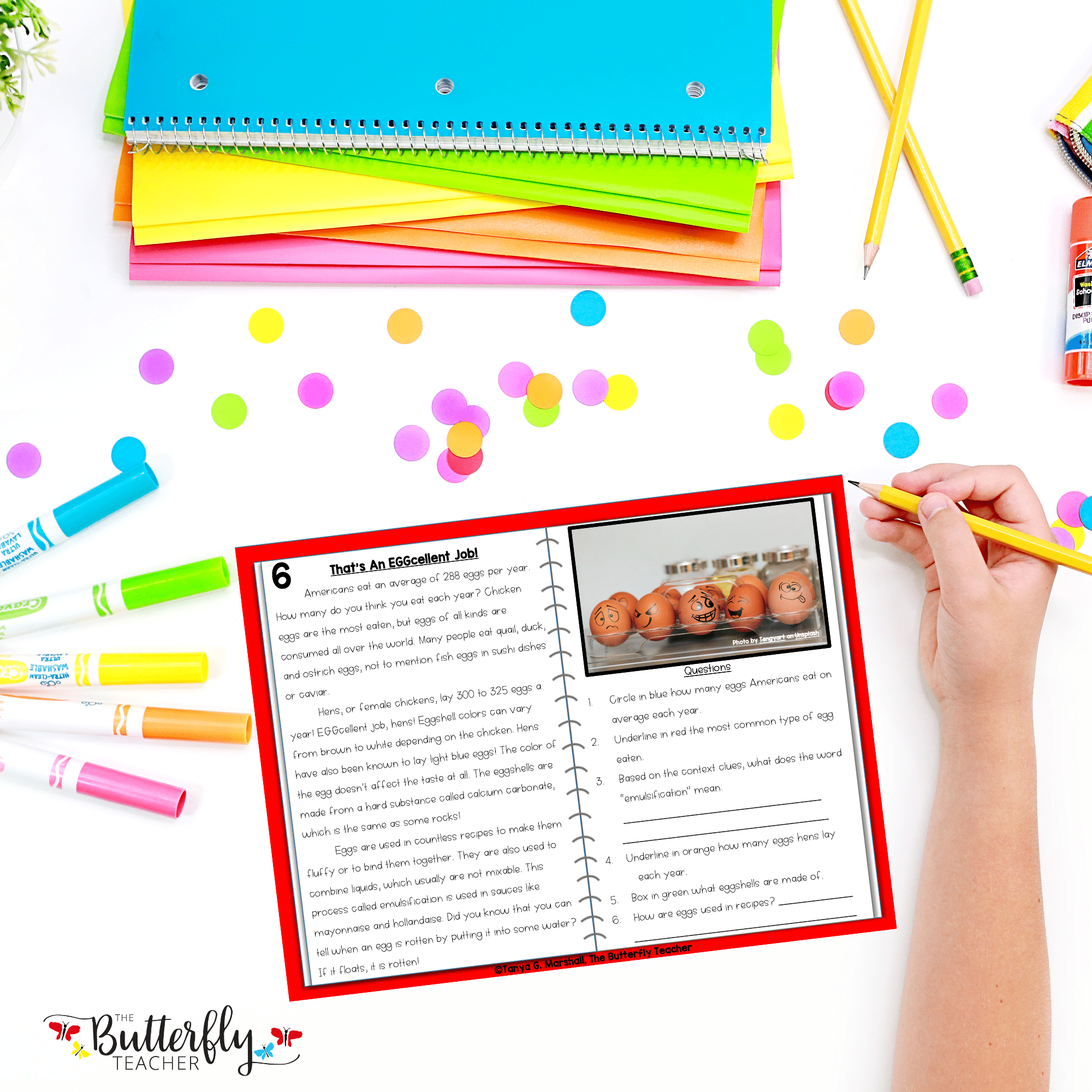
Let Students Annotate the Passage Using Markers or Colored Pencils
Encourage students to:
- underline important details
- circle unfamiliar words
- highlight text evidence
- write notes in the margins
This helps students stay actively involved with the text.
Turn Passages Into Mini Investigations
Instead of simply answering questions, ask students to:
- solve a question using evidence
- explain their thinking to a partner
- defend their answer with proof
Students love feeling like reading detectives. 🕵️♀️ You can jazz up the engagement even more by giving students inexpensive magnifying glasses to search for context clues.
Add Partner Discussions
After students read and answer questions, let them discuss:
- What surprised them in the passage
- Details on what new information they learned
- Which question was most challenging
These discussions deepen comprehension and help students verbalize their thinking. Not only that, but this is also an effective way to deal with having a more chatty class during this time of the year! Students want to talk more, so at least they are talking about what they’re learning and staying on track.
How to Help Struggling Readers with Spring Reading Comprehension Passages
Some students need extra support with nonfiction reading comprehension.
I learned that scaffolding the reading process makes a huge difference and allow you to teach informational text reading in a fun way.
Strategies That Support Struggling Readers
Pre-teach the more difficult vocabulary
Before reading, introduce a few challenging words by teaching the definition explicitly.
Students can:
- discuss meanings while they draw pictures that represent the word
- use them in sentences
- predict how they might appear in the passage OR come up with synonyms and antonyms to match the words
Model context clues
Read part of the passage aloud and think aloud as you determine a word’s meaning.
Example:
“The word migration appears here. The next sentence says animals move from one place to another during the winter. That helps me figure out what migration means.”
Read together first
For some students, reading the passage aloud together builds confidence before they answer questions independently.
Highlight key details from the passage
Teach students by modeling how to:
- highlight important facts
- underline evidence
- connect answers directly to the text
Upper elementary students don’t automatically know to do these things when reading; they need to be taught directly. These strategies help them gradually become stronger independent readers by boosting their comprehension.

All the passages in this Spring reading bundle easily allow you to do everything mentioned! No extra lesson planning, just print and go. Click the image to see the full set.
How to Use Spring Reading Passages for Test Prep
Spring also means testing season.
Short reading comprehension passages are perfect for daily test prep practice.
They allow students to practice important skills like:
- text evidence
- reading informational text
- answering test-style questions
- explaining reasoning
There are just some ELA test prep strategies that do not work! Instead of long test prep sessions, many teachers use 10–15 minute reading warm-ups with short passages.
This keeps skills fresh without overwhelming students.
FAQ: Spring Reading Passages for Upper Elementary
How can I make spring reading passages more engaging for upper elementary students?
Besides all the ideas mentioned above, try other interactive strategies like:
- Highlighting text evidence with fun writing utensils that make “work” feel more like play 🖍️
- Turn the passage into a “Fact Finder” challenge. 🔍 Ask students to locate 3–5 interesting facts in the passage and share the one they found most surprising.
- Create a quick sketch response. 🎨 After reading, students draw a small illustration that represents the main idea or an important detail from the passage.
- Write one “teacher question.” 👩🏻🏫 Students create a question about the passage that they think would challenge their classmates.
- Add a “Did You Know?” connection. 🤔 Students write one new thing they learned from the passage and explain why they found it interesting.
- Make a quick real-world connection. 🌎 Ask students to explain how the topic relates to something they’ve seen, experienced, or learned about before.
- Rate the passage. ⭐️ Students give the reading a rating (1–5 stars) and explain their reasoning in one sentence.
- Headline the passage. 📰 Students write a newspaper-style headline that summarizes the passage in just a few words.
Small engagement strategies like these help students interact with informational text in new ways and keep reading activities feeling fresh during the spring months.
How long should a morning work reading activity take?
Most morning work reading activities should take 10–15 minutes. You may even want to combine it with other spiral ELA activities that are quick and compliment a quick-read passage.
Short reading comprehension passages are ideal because they allow students to practice reading skills without taking up too much instructional time.
How can homeschool families use spring reading passages?
Homeschool families can easily use spring reading passages as part of their daily reading routine. A short passage can be read together first, followed by a few comprehension questions to get your kiddos talking about their reading more.
As a homeschool group, you can often use short reading passages for:
- daily reading practice
- comprehension checks
- spring break reading packets
- independent learning activities
Parents can pause to talk about unfamiliar vocabulary, ask their child to find evidence in the text, or connect the passage to real-life topics like spring weather, plants, or animals. This simple routine builds reading comprehension while keeping lessons short, focused, and meaningful. Many parents also like using short passages for independent practice, quick assessments, or light reading during spring break trips.

April Fools’ Day spring reading passages definitely keep your kids happy to read! Click the image to see the full set.
Ways Teachers Use Spring Reading Passages
3rd, 4th and 5th grade teachers use spring reading passages in so many creative ways. Here are some of the most common classroom uses:
- Bell ringers
- Morning work reading
- Reading centers
- Early finisher activities
- Homework practice
- Small group instruction
- Reading sub plans
- Spring break reading comprehension packets
- Homeschool reading practice
- Quick test prep warm-ups
Short passages are incredibly flexible, which makes them perfect for the busy months of March, April, and May. They are also perfect for keeping kids engaged around Spring Break.
A Simple Way to Add Spring Reading Practice to Your Classroom
Spring gets busy fast—testing, field trips, and end-of-year excitement can make it harder to keep reading routines consistent.
Short spring reading passages make it easy to keep students practicing key skills in just a few minutes a day. They work well for morning work, reading centers, early finishers, or quick comprehension practice.
If you want ready-to-use passages, check out the Spring Close Reading Passages Bundle with 25 no-prep nonfiction passages for March, April, and May.
Or feel free to share below! 💬
How do you keep reading practice engaging during the spring months?
