


Teaching inferencing in upper elementary can sometimes feel like you’re speaking a secret language that only a few students understand. But when you bring in fun, bite-sized riddles? The game changes! Inferencing Riddles give our scholars the chance to flex their thinking muscles in a low-pressure, high-engagement way. They’re basically mini reading passages full of hidden clues just waiting to be unpacked.
If you’re looking for an engaging and consistent way to build inferencing skills, you’re in the right place.
Plus, don’t miss the chance to grab a FREE set of inference task cards you can use right away with your students!
This post contains affiliate links to Amazon for your convenience. As an Amazon Associate, I earn from qualifying purchases, which do not cost any extra for you. Please see the full disclosures.
What Is Inferencing?
Inferencing is more than just guessing. It’s when students use clues from what they read or see, combined with their background knowledge, to figure something out that isn’t directly stated.
Upper elementary students are expected to:
- Read between the lines
- Use context clues
- Understand character motivation
- Analyze complex texts
That can be a lot! And often, students confuse inferring with predicting. Here’s a quick breakdown:
- Prediction: What do you think will happen next?
- Inference: What can you figure out right now using the clues + what you already know?
Riddles are a great way to make that distinction crystal clear!
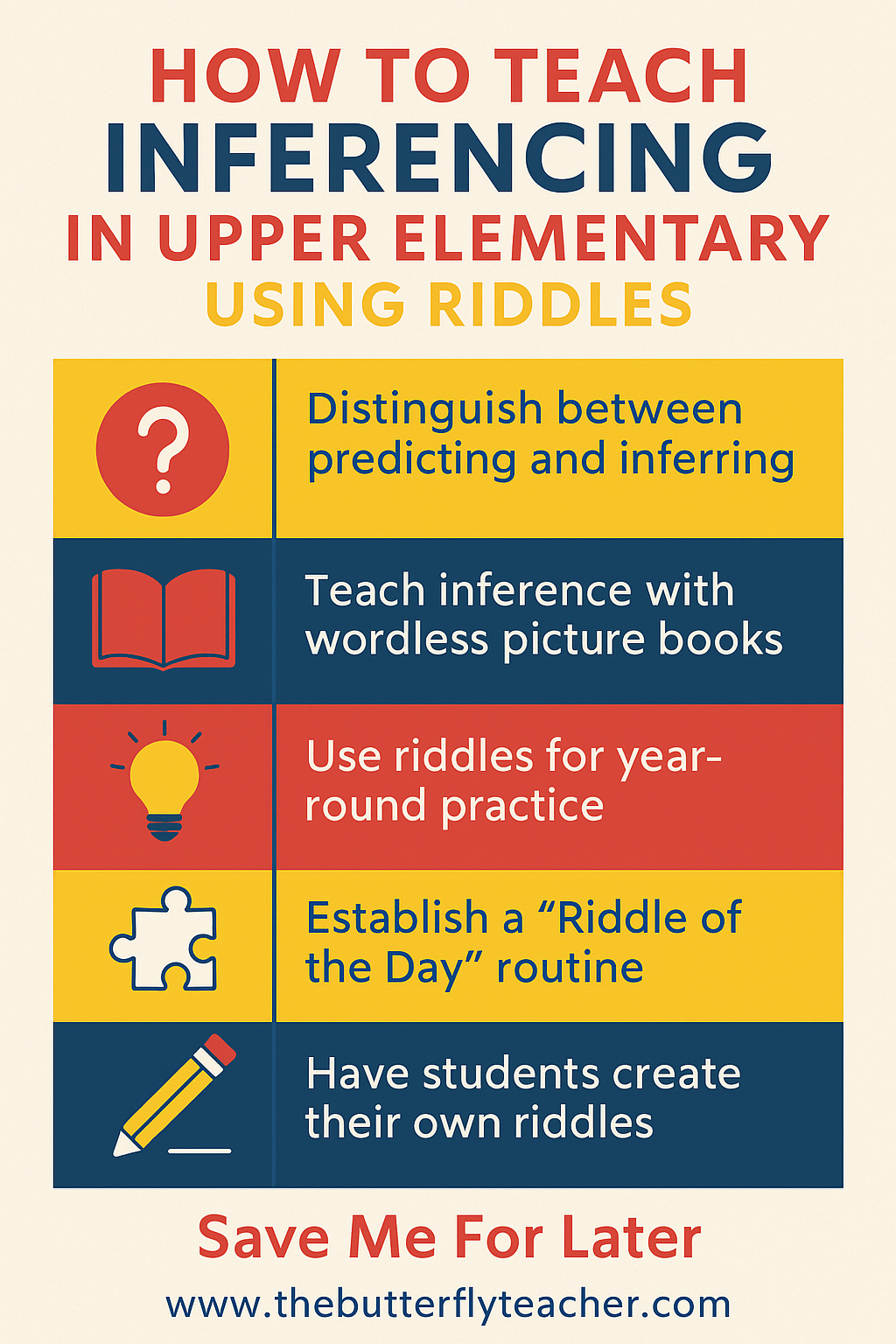
Support Inferencing in Upper Elementary with Visuals and Wordless Books
If you’re just introducing inferencing, starting with visuals can help remove the pressure of decoding text. Using pictures helps students get into the habit of making educated guesses based on evidence they can see.
Two top recommendations to get started with are Flotsam by David Wiesner and The Red Book by Barbara Lehman. Both are completely wordless and packed with visual clues that invite students to infer what’s happening beyond the surface of each page.


If you want more wordless inferencing books for your upper elementary classroom, check out this Amazon list featuring several teacher-approved titles!
You can also use visual activities like this Inferencing with Pictures Slideshow to help model and practice making inferences. (see images below)


Students analyze images and discuss what’s happening based on visual clues—a perfect bridge to textual inference.
Why Riddles Work for Teaching Inferencing in Upper Elementary
Riddles are more than a fun warm-up. They are short texts filled with context clues, figurative language, and implied meaning—just like a challenging paragraph in a chapter book!
Each riddle gives students a mini reading experience where they must:
- Look for textual clues
- Use background knowledge
- Draw conclusions
That’s inferencing in action! And since riddles are usually playful and theme-based, they don’t feel like traditional reading comprehension practice.

Seasonal inference riddles like these winter passages give your students practice making inferences with a fun twist!
Use Seasonal Riddles for Ongoing Inference Practice
One of my favorite strategies is to use seasonal and holiday-themed riddles all year long! 🍂
When riddles are tied to pumpkins in October or snowflakes in January, they instantly grab student attention. More importantly, they give repeated practice with inferencing in different contexts. Here are a few ways to use them:
- Morning Warm-Ups: Start the day with a themed riddle.
- ELA Centers: Let students solve and explain riddles in small groups.
- Partner Challenges: Give two versions of a riddle and have students compare clues.
This turns inference practice into a habit rather than a one-off lesson.

Valentine’s Day Inference
Riddles

Thanksgiving Day Inference Riddles

Christmas Holiday Inference Riddles
Riddle of the Day Routine
Create a simple classroom routine where students solve one riddle a day. You can:
- Write it on the board
- Add it to your slides
- Display it near your classroom door
This is also the perfect time to bring in non-seasonal riddles that work like mini reading passages. My 5th Grade Inferencing Passages set includes 30 Inference Slips that are ideal for exit tickets, lesson warm-ups, and more.

These short stories challenge students to think critically and refer back to the text multiple times—just like real comprehension work.
Then lead a short discussion:
- What clues helped you?
- What background knowledge did you use?
- What’s your best guess—and why?
This type of spiral review gives students daily inference reps without adding extra grading to your plate.
Let Students Create Their Own Riddles
Want to take it up a notch? Have your students write their own inferencing riddles!
They’ll need to:
- Choose a topic: this could also be a character, holiday or season
- Decide which clues to have in the riddle–graphic organizers will help your kiddos decide on the main details to include
- Think about what readers already know
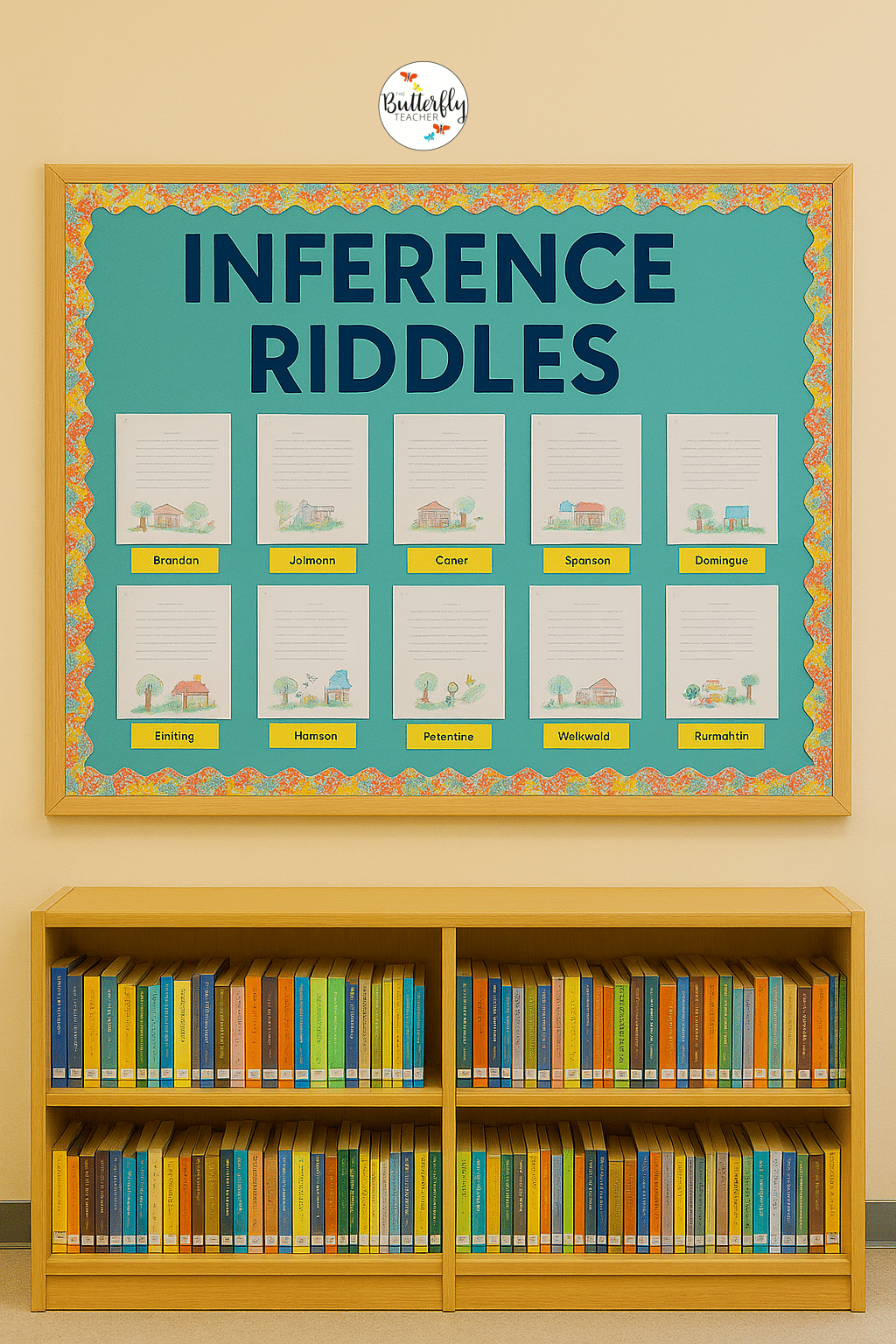
This flips their perspective and helps them understand how authors give hints (without making the answer too obvious). You can even compile student riddles into a classroom riddle book or turn it into a bulletin board display.
Why Riddles Reinforce (Not Isolate) Inferencing Skills
Teaching inferencing in isolation for just one week won’t build long-term reading growth. But using riddles regularly:
- Connects inferencing to figurative language, vocabulary, and even writing
- Helps students apply inference skills to characters, plot, and theme
- Fits easily into ELA, science, and even social studies!
You can tie riddles into just about anything. And because they’re short, they make great warm-ups before diving into deeper texts.

Halloween inference riddles like these give your students practice making inferences with a fun October twist!
Tips for Getting the Most Out of Inference Riddles
- Use sentence stems: “I infer ___ because ___.”
- Start with easier riddles and build up complexity
- Model your thinking aloud as you solve them
- Let students debate answers using evidence
- Pair riddles with images or props for extra support
These strategies help your scholars not only enjoy riddles but understand how their brains are making inferences.

Check out a list of inferencing picture books from this curated collection in my Amazon store.
Frequently Asked Questions About Teaching Inferencing in Upper Elementary
Q: How often should I teach inferencing?
A: Inferencing should be practiced regularly—even just 5 minutes a day can build long-term comprehension skills. Try warm-ups, center rotations, or a “riddle of the day” to make it part of your routine.
Q: My students keep guessing instead of inferring. What should I do?
A: Use scaffolds like sentence stems and anchor charts. Model your own thinking process by showing how you use both clues and background knowledge. Clarify the difference between guessing and inferring by using riddles or visuals where evidence is easier to spot.
Q: Can I use inferencing activities across content areas?
A: Yes! Inferencing applies in science (e.g., “What can we infer from the data?”) and social studies (e.g., “What can we infer about life during this time period?”). The more students infer across subjects, the better they understand the process.
Q: What are the best types of riddles to use?
A: Seasonal or themed riddles work well because they’re timely and relevant. Use riddles that include strong descriptive language and enough clues for students to analyze and support their answers.
Q: How can I differentiate inferencing with riddles?
A: Offer riddles at various reading levels or provide clues in multiple formats (e.g., add a picture or read aloud). You can also have students work in pairs or small groups to support each other.
Free Inference Reading Passages for Upper Elementary
Seasonal inference riddles make it so easy to keep your lessons fresh and engaging all year long. You don’t have to create anything from scratch—just print and go!
Also, don’t forget to grab your FREE Inference Task Cards that can be used like exit slips to help your students build confidence with this essential skill.
Signing up also gets you access to my weekly teacher newsletter packed with more upper elementary teaching tips. 💌
If you loved these ideas, you’ll also want to check out 8 Fun Activities for Teaching Inference for even more hands-on inspiration!