



If you’re staring at your lesson plans wondering, “What am I actually supposed to do on the first day of second grade?”—friend, you are not alone. ❤️ I felt the same way when I was a new 2nd grade teacher.
The first day can feel like a mix of excitement, nerves, classroom setup chaos, and a million questions running through your mind all at once. Should you jump into academics? How do you teach routines without sounding like a broken record? What if your students come in chatty, shy, wiggly, or all three at the same time? 🫣
I’ve been there, and I want to help you breathe a little easier.
This survival guide is for new 2nd grade teachers who want a realistic, simple, and effective plan for the first day of school. You do not need a perfect, Pinterest-level classroom to have a great first day. You just need a calm plan, clear routines, and a warm welcome.
Let’s walk through exactly how to make the first day of second grade run more smoothly.
This post contains affiliate links to Amazon for your convenience. As an Amazon Associate, I earn from qualifying purchases, which do not cost any extra for you. Please see the full disclosure here.
First Day of Second Grade: What Should You Actually Teach?
First of all, welcome to 2nd grade teaching! Whether this is your first time ever teaching or you’ve moved here from another grade level, I truly think you’ll enjoy it. Over my total 13 years teaching, I spent 4 of them with my sweet second graders and it was a joy. 🤩
Now, let’s address your very first day plan…on the first day of second grade, you should begin teaching routines, expectations, classroom procedures, and relationship-building first. Academics can be light, but your main job is to help students feel safe, seen, and successful.
New teachers sometimes feel pressure to jump straight into curriculum. But your students need to know how your classroom works before they can fully engage in learning.
This will do wonders for sustainable classroom management!
Here’s what I recommend focusing on:
Priority #1: Teach procedures. Students need to practice routines like these:
• Entering the classroom
• Unpacking supplies
• Hanging up backpacks
• Where to put folders and homework
• How to get your attention
• Transitions from carpet to desk
• Bathroom procedures
• Lunch count and dismissal routines

It may not seem like a big deal, but you need to set up an effective pencil system! This will save you so much headache for your first day of second grade and beyond.
Priority #2: Build community in Your New 2nd Grade Classroom
Second graders still need plenty of connection and reassurance. Try activities like:
• Name games
• “Find someone who…” mixers
• Partner interviews
• Classmate scavenger hunts like these
• An “All About Me” page like this easy desk topper ⬇️ that 2nd graders will enjoy doing independently. 🖍️


Priority #3: Introduce simple academic tasks
Keep academics low-pressure on day one, but weave them in as you teach procedures and routines.
Some easy options are:
• A read-aloud with a discussion follow-up
• A writing prompt like “My 3 Favorite Summer Memories”
• A math review game that’s low-key and simple to understand
• Drawing and labeling school goals
When I taught 2nd grade, I learned quickly that the smoothest school years started with strong routines and modeling procedures right away. The first day is about setting the tone, not racing through academic content.
How Do I Plan the First Day of Second Grade Without Overcomplicating It?
You need a simple schedule with a balance of movement, modeling, and short activities. The biggest mistake I see is planning too much and leaving no room for transitions.
Here’s a realistic first day of second grade outline you can adapt:
Arrival with Simple Morning Work Activity
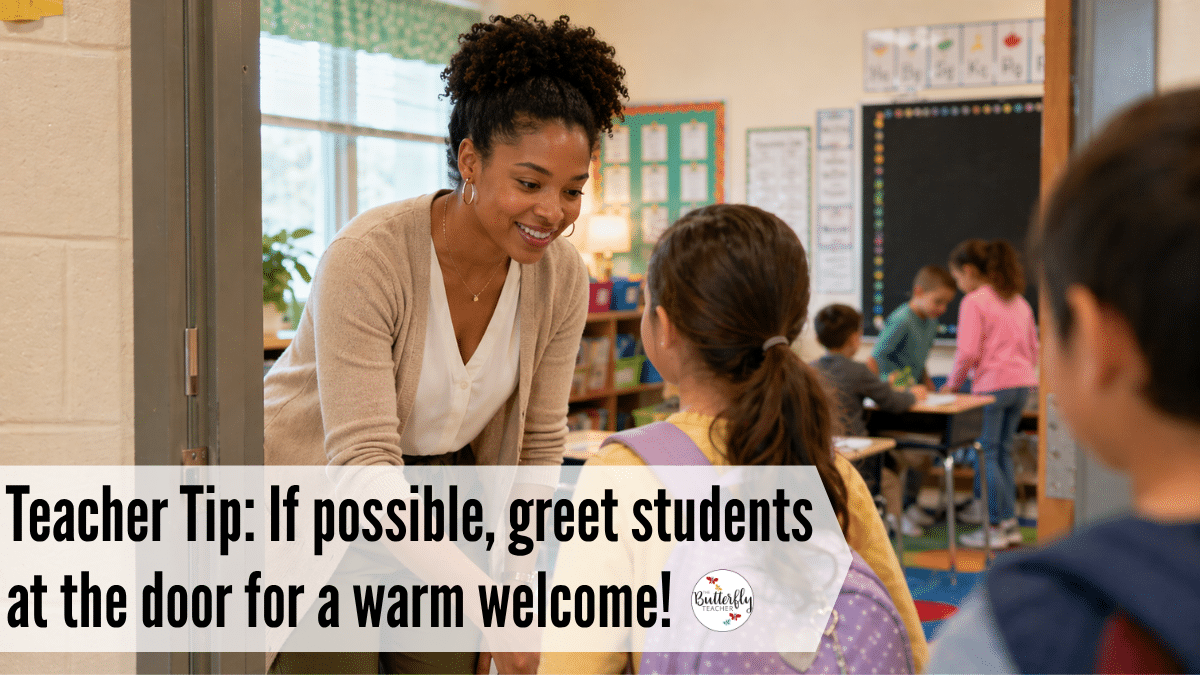
Keep arrival calm and structured. I always greeted each student at the door to make them feel welcomed.
Students can:
• Find their assigned seat
• Complete a simple coloring page or name activity
• Unpack with your guidance
• Read a welcome message on the board
A predictable start lowers anxiety for everyone.
Morning Meeting Whole Class Activity
This is a great time to introduce yourself, welcome students, and begin building trust. I loved doing this with my students sitting on the carpet with me.
You might include things like:
• A short greeting
• Your class motto or expectations
• A fun and simple icebreaker; choose any of these first day options that work well for 2nd graders
• Showing a quick overview of the day so students know the gist of their schedule
Classroom Tour and Procedures–Scavenger Hunt Style
Show students where important materials are and explicitly model routines. The best way to do this is to gamify it with a fun Classroom Scavenger Hunt activity.
Walk through the areas and procedures for:
• Supplies
• Library area
• Where they need to turn-in homework or classwork
• Classroom jobs
• Technology stations
Then have students practice those routines right away.


This editable classroom scavenger hunt allows students to learn the layout and setup of your class in a fun way. Click the image to see the full set.
Activities like this one could even be extended into a school scavenger hunt to teach students your procedures on how to walk through the hallways.
First Day of School Read-Aloud and Discussion
A back-to-school read-aloud is perfect for introducing classroom values. Books about kindness, courage, or school jitters work beautifully. My go-to choice was always First Day Jitters by Julie Danneberg.
This presents another opportunity to have some academic work included. I also used this as a chance to teach the procedure of partner work so that I could begin making steps towards small group activities.
Having students work with a partner on this gives them a chance to talk, get to know their classmates and practice working independently at their desks without me guiding them through a lesson. This sets the building blocks for small group rotations later.
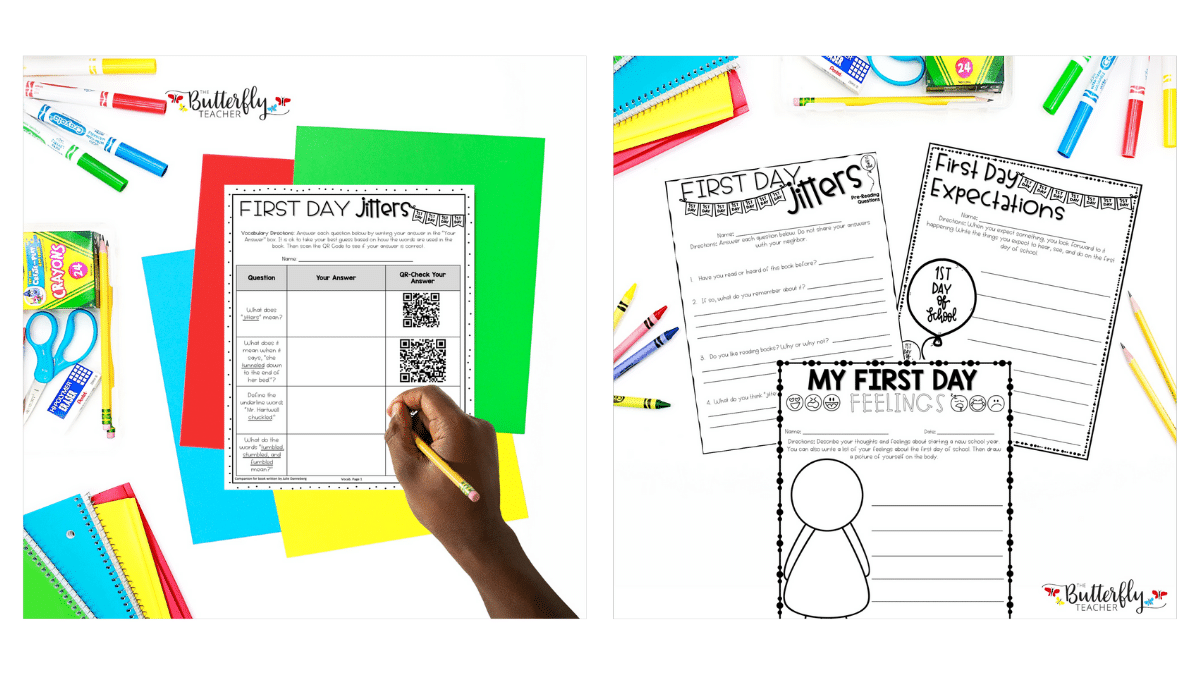
My First Day Jitters book companion activities are no-prep and aligned perfectly to the book. These fun worksheets give your kiddos a chance to have simple academic work, review the story, and I included get-to-know-you activities.
Independent Work and Movement Breaks
Second graders need short tasks and lots of movement too. Especially after being out for a couple of months of summer break. Be sure to build these into your first day routines.
Use ideas such as:
• Quick stretch breaks
• Turn and talk moments
• A classroom walk
• Go Noodle or fun brain breaks that get students out of their seats for a few moments.
End-of-Day Reflection for the First Day of Second Grade
Kids need help when it comes to reflection and review. Thinking back over the good parts of their day and all the new things they learned really helps with retention too.
Of course, you will continue to teach and model and procedures through the first weeks of school, but you’ll want a creative way to wrap up the first day with reflection.
Before dismissal, ask students to reflect.
Try prompts like:
• One thing I learned today…
• One new friend I met…
• One question I still have…
In my coaching work with teachers, I often remind them that a “successful” first day is not a perfectly timed one. It’s a day where students leave understanding a few key routines and feeling good about coming back tomorrow.
What Are the Best First Day of School Activities for 2nd Grade?
The best first day of school activities for 2nd grade are simple, interactive, and focused on community-building. You want activities that help you learn about your students while also teaching them how to participate in your classroom.
Here are some favorites:
1. All About Me Page or Craft
This gives students a chance to share about themselves in a low-stress way. It also makes a quick bulletin board display. My favorite is anything that can connect to things most 2nd graders enjoy (like ice cream🍦😋), but it also makes such a cute back-to-school bulletin board.

This “Scoop About Me” activity was a hit with my former 2nd graders! My co-teacher and I also completed the craft so that our students could get to know us well. Click the image for more details.
2. Classmate Scavenger Hunts
Let’s go ahead and deal with a reality you will face: some students WILL be talkative on the first day of school. Especially your kids who have classmates from first grade that they already know.
I don’t remember any of my new classes NOT being a chatty class during the first week of school. 🤦🏾♀️
Instead of fighting against this and being labeled “the mean teacher” on the first day, I used it to my advantage with planning.
Classmate scavenger hunts give kids a chance to:
- talk about what they did over the summer OR what they look forward to
- move around the classroom without chaos
- get to know their classmates better (not just their besties, but everyone!)
- practice your procedures for moving around the room correctly
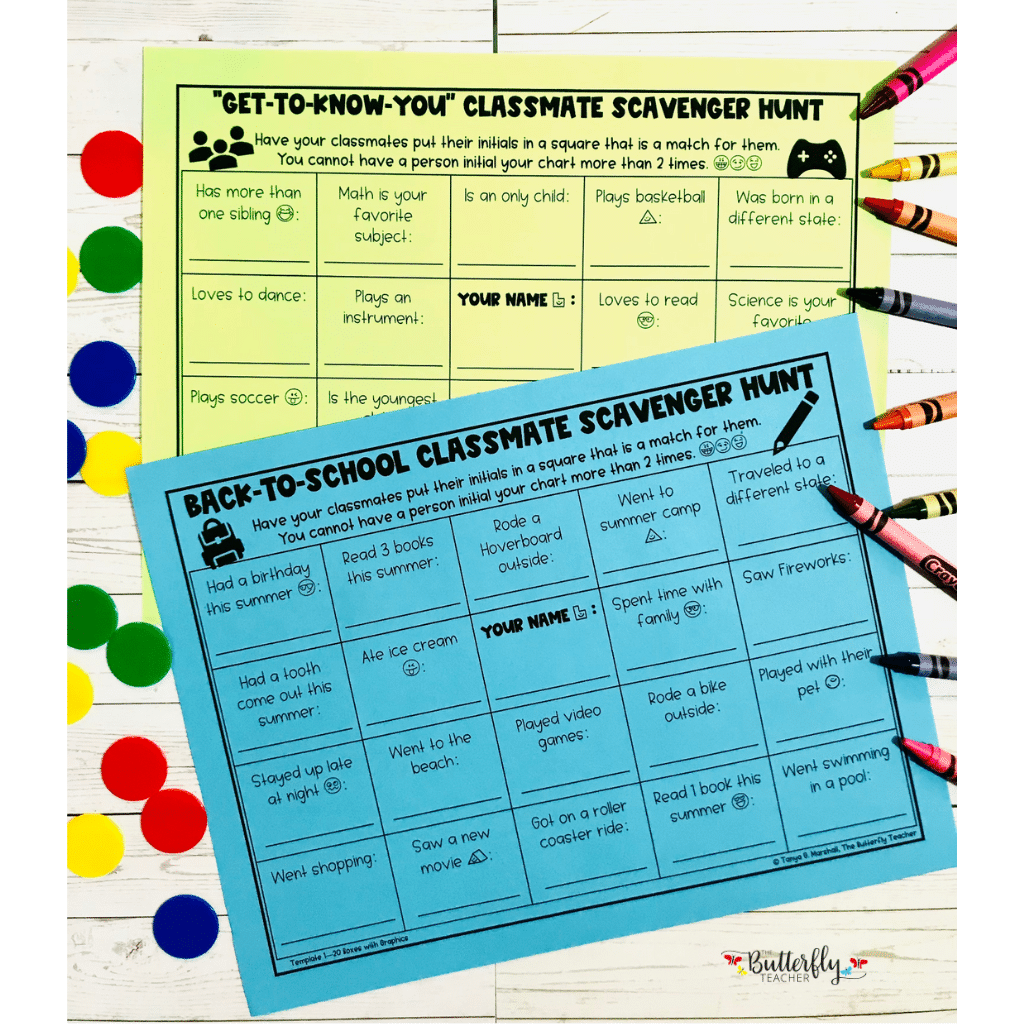
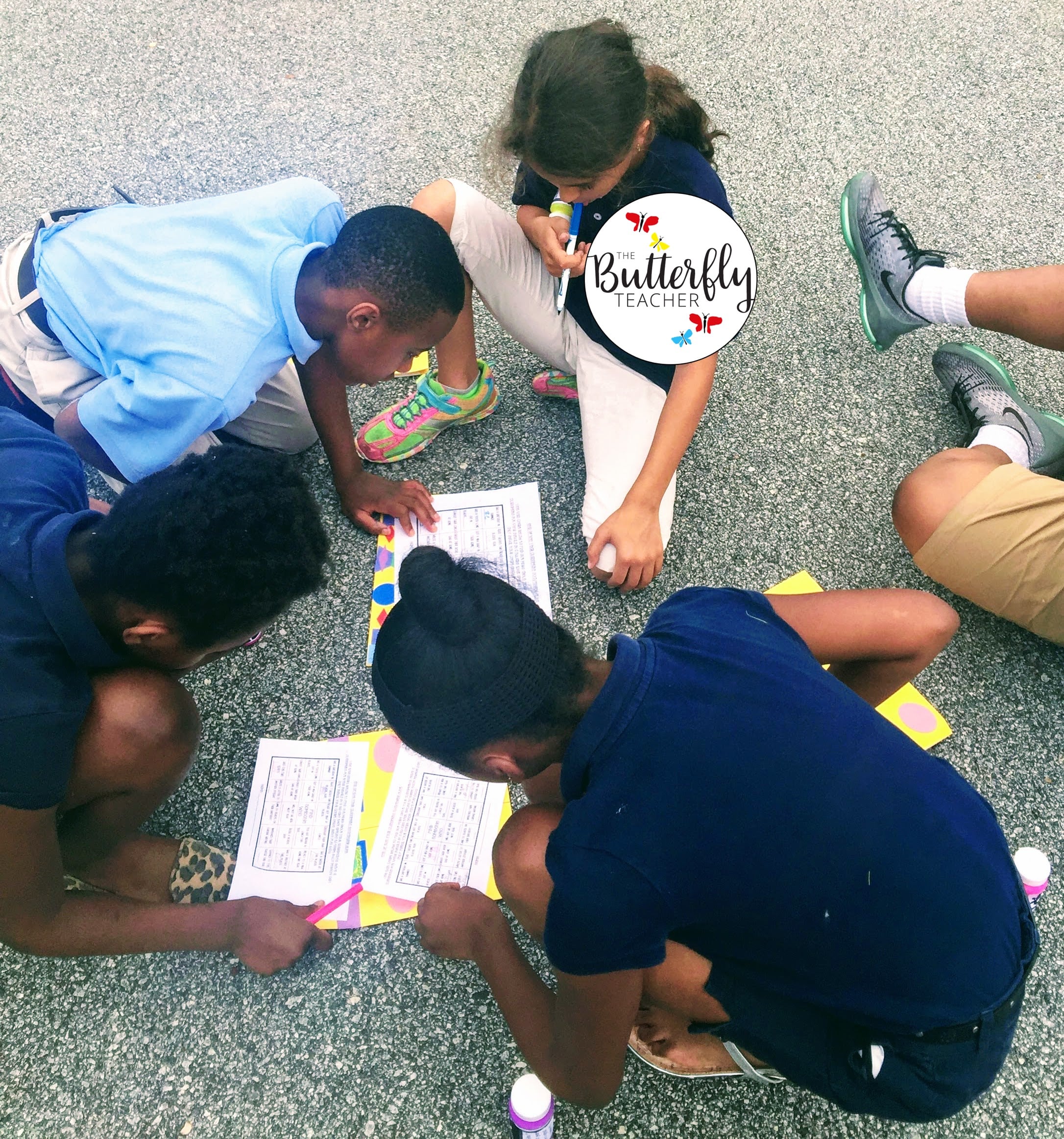
I could go on and on about how well they worked when I taught 2nd grade! I loved them and so did the kids. As a new 2nd grade teacher, I know you will love them too. 😍 Click either image above for those editable versions.
3. Name Games
Using quick games to learn names not only helps your students, but it also will do wonders for you too! Knowing your kids’ names quickly makes them feel welcomed and known, which builds a stronger teacher-student relationship.
Try ideas like:
• Name toss with a soft ball or inflatable emoji balls like these
• “My name is ___ and I like ___”
• Partner name practice

Speaking of fun community builders, these inflatable balls are also a hit to get to know students. Click the image to see how they work.
4. Back-to-School Read-Aloud Response
Even though I don’t have heavy academic content, I always start the school year with reading. I want to establish the tone and a love for reading with engaging 2nd grade read-alouds.
Read a favorite first-day book out loud and have students respond with:
• how they feel about their first day
• questions they have about being in your classroom
• anything they want to know about your
You can also use back to school books to start goal-setting and reflecting on how the year will go. This creates calm while also getting your kiddos to think ahead.
5. School Supplies Sort
Some schools allow students to bring in supplies for open house or meet the teacher night, which is before the first day of school.
But this is no guarantee that all students will attend that night AND several of them will still wait to bring supplies on the first day.
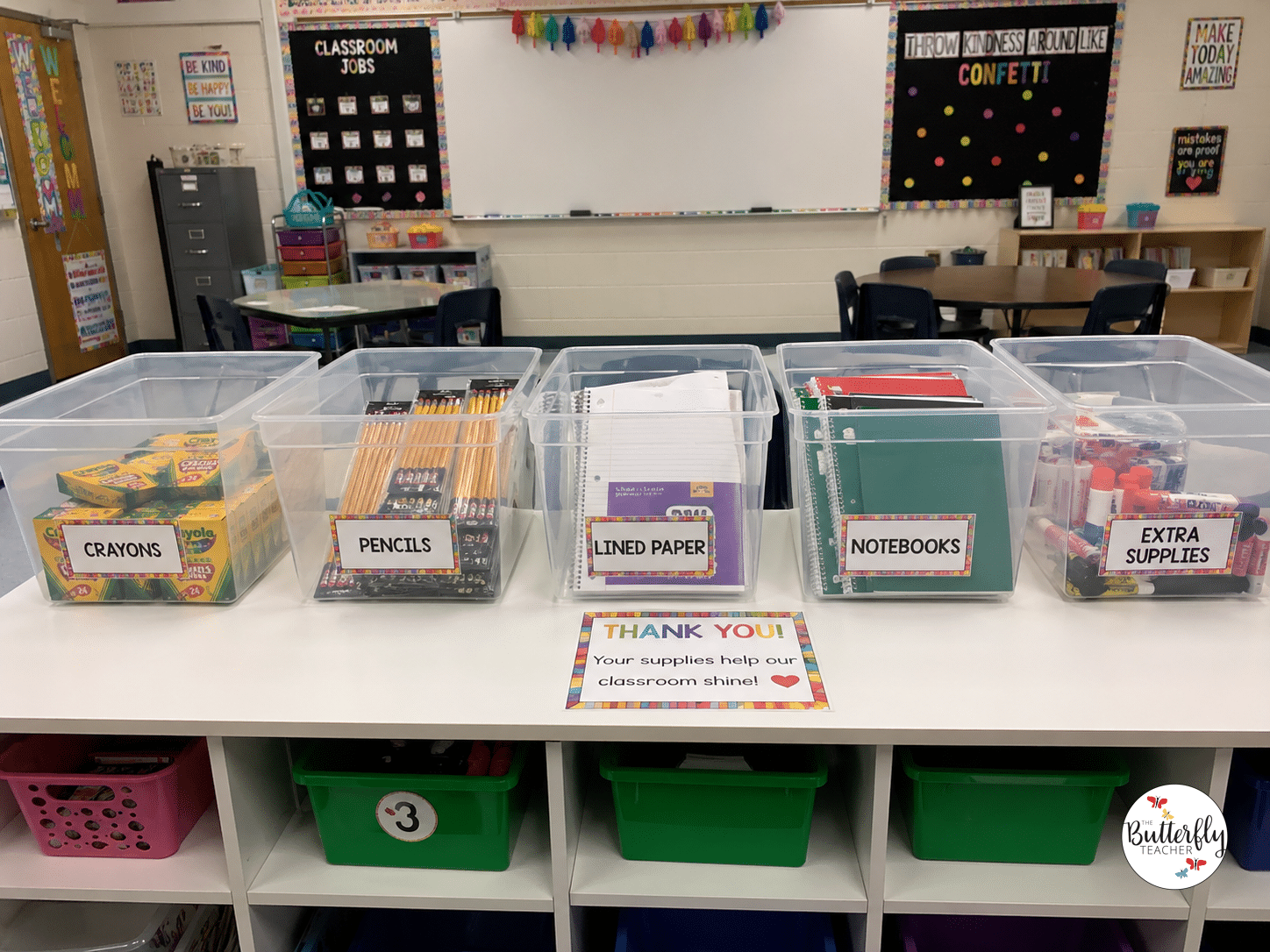
Having a plan woven into your lessons for addressing this is especially helpful if students are bringing lots of materials on day one. Turn supply organization into a guided activity or a game instead of a rushed chore.
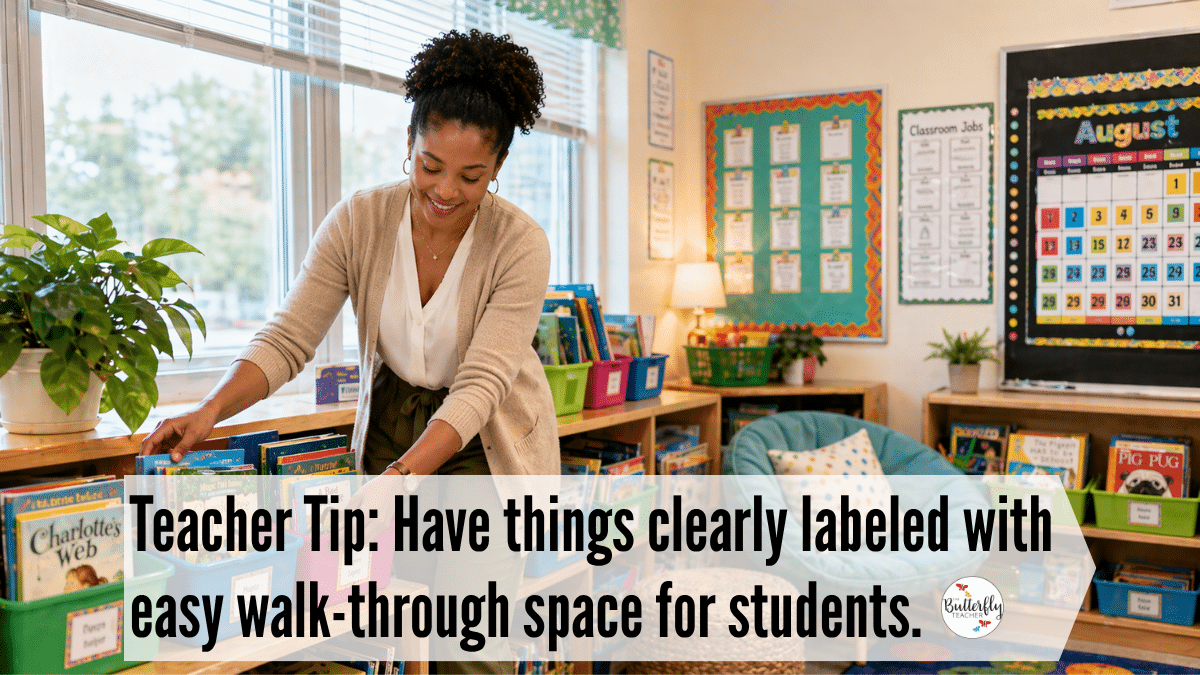
Having clearly labeled bins and making the process like an assembly line allows you to get everything done smoothly.
How Do You Manage Behavior on the First Day in 2nd Grade?
You manage behavior on the first day by teaching expectations clearly, modeling them, and having students practice them multiple times. Don’t assume students “should know better” because they’re in second grade.
Second graders need explicit teaching just like every other grade level. I learned SO MUCH about establishing a well-run classroom from using Harry Wong’s First Days of School.
Here’s what works well:
Keep Expectations and Rules Short on the First Day
Too many rules will confuse students. You actually don’t need a long list of rules when you have great procedures and routines. Choose 3-5 main classroom rules or core expectations.
Examples:
• Be respectful
• Be responsible
• Be safe
• Be kind
My classroom rules “theme” was The Golden Rule: Treat Others The Way You Want to be Treated.”
It took modeling and intentional activities for students to understand how to apply this in practical ways, but it was a game-changer for my classroom management system!
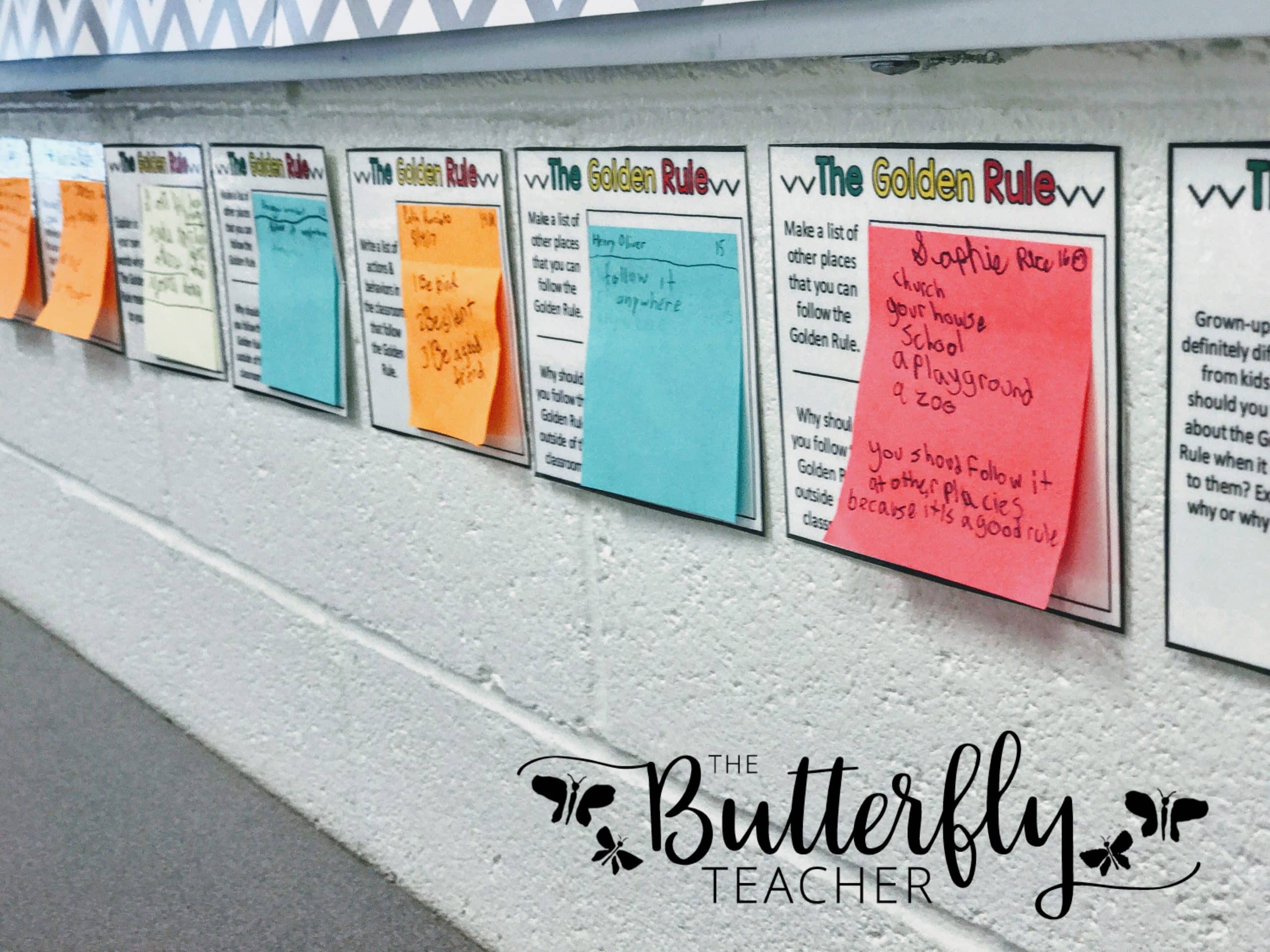
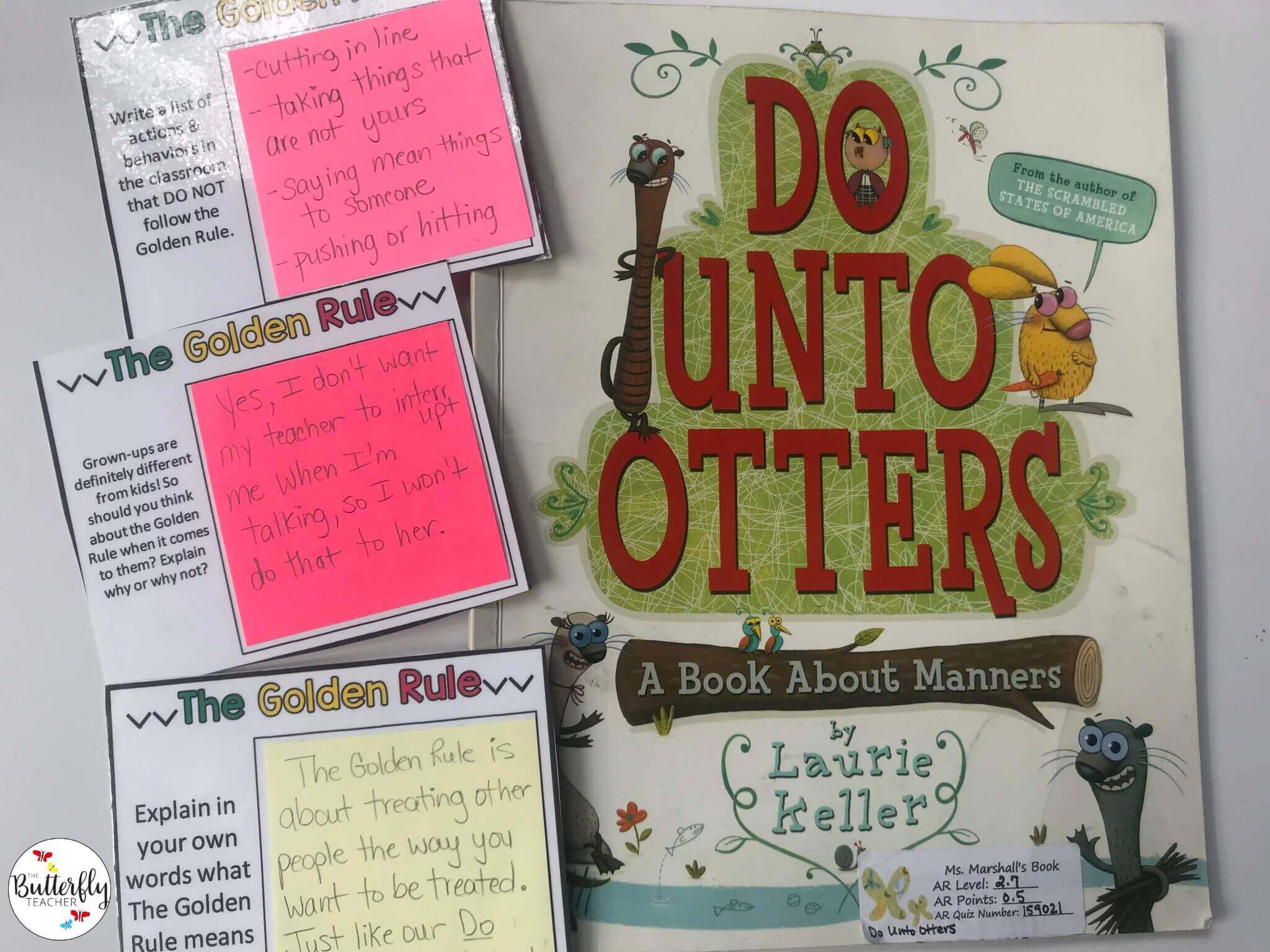
I also connected this rule to the book Do Unto Otters: A Book About Manners from Laurie Keller, which gives kids ways to practice the Golden Rule in the classroom. Click either image for more details.
Model What It Looks Like
Show the right way and, if appropriate, the silly wrong way too. Students remember the visual examples.
Practice, Practice, Practice
Don’t just explain routines once. Be prepared to practice procedures throughout the first several weeks of school. I always prepared myself to weave in procedures training for the first 6 weeks of school.
Have students repeatedly practice:
• Lining up
• Walking in the hallway
• Getting materials
• Coming to the carpet
• Asking for help
Use Positive Narration
Here’s an important communication hack I learned from my mentor teacher who taught 2nd grade for almost 30 years: tell students what you want them to do instead of telling them what not to do.
For example, instead of saying something “Don’t run down the hallway.” Reframe it to focus on the positive action you want like “You will walk down the hallway like this…” Then demonstrate what you expect.
Another example would be to reframe from saying “I don’t want to see you sharpening your pencils like this…” try “You will do this when you use the pencil sharpener.”
It also really helps to highlight positive behavior when you see it in your students. Try language like:
• “I see Jayden and Mia ready with eyes on me. Great job!”
• “Thank you to Table 2 for cleaning up quickly.”
• “Ohhh, I love how Antonio put his name on his paper as soon as he got it.”
Correct Calmly
When students get off track, stay steady. The goal is to reteach, not react. You are the adult, so show them how to stay kind but firm.
Teacher feedback over the years has shown me that behavior struggles on the first day often come from unclear procedures, not “bad” kids.
That’s why I always say: if something feels messy, slow down and reteach the routine.
What Should New 2nd Grade Teachers Prepare Before the First Day?
Before the first day, prepare your essential routines, materials, and welcome systems. You do not need every bulletin board perfect, but you do need the classroom functional.
Here’s your practical checklist:
Must-Have Items To Get Ready:
• Name tags or desk tags
• Morning work prepared
• Class list and transportation notes
• Dismissal plan
• Supply organization bins
• Read-aloud book
• Emergency procedures folder
Systems to Decide Ahead of Time:
• How students enter the room
• Where unfinished work goes
• What to do when they need a pencil
• How you’ll get attention
• What early finishers do
• How dismissal will work
Teacher Prep That Really Matters:
• Write your schedule down or have it posted somewhere near your teacher desk
• Overplan transitions and be ready with a no-prep back option because things will go wrong as some point with the schedule 🙃
• Print extra copies of everything
• Have a calm activity ready in case time runs long
• Keep water and a snack for yourself 😊
One thing I’ve learned from teaching 2nd grade for 5 year and now as an educational consultant, is that teachers often underestimate how much smoother the day feels when they script key moments ahead of time.
Even a sticky note with your welcome message, transition phrases, and dismissal reminders can make a huge difference.
How Can I Make Second Graders Feel Comfortable on the First Day?
You can help second graders feel comfortable by creating a warm environment, using predictable routines, and speaking with calm confidence. Students don’t need you to be perfect—they need you to be steady.
Try these small but powerful moves:
• Greet students at the door by name if possible
• Smile and make eye contact
• Tell students exactly what to do first
• Reassure them that it’s okay to have questions
• Use partner activities before whole-group sharing
• Keep your voice calm and upbeat
• Celebrate effort, not perfection
When students know what to expect, they relax. And when they relax, they listen, participate, and connect more easily.
Your classroom atmosphere matters just as much as your lesson plans.
I also strongly recommend having your first week routines and literacy block plans ready to go. That’s something I build into many of the classroom resources I create, because teachers need materials that work in real classrooms—not just on paper.
What if the First Day of Second Grade Doesn’t Go as Planned?
If the first day feels messy, that is completely normal. Truly. The goal is progress, not perfection.
Maybe the lunch routine was confusing. Maybe dismissal felt chaotic. Maybe your read-aloud took longer than expected and you skipped an activity. That does not mean you failed.
It means you’re teaching children, and children need time.
Here’s what to do instead of spiraling:
• Jot down what worked
• Note which routines need reteaching
• Simplify tomorrow’s plan
• Ask a teammate one quick question instead of overthinking alone
• Give yourself credit for what went well
The first week of school is where routines are built. Day one is just the starting point.
How long should first day of second grade activities be?
Keep most first day of second grade activities between 10 and 20 minutes. Short, structured tasks work best because second graders tire quickly during new routines. Build in movement, transitions, and repetition so students stay engaged without feeling overwhelmed by too much sitting or listening.
Should I teach academic content on the first day of second grade?
Yes, but keep it light and low-pressure. Your main focus should be routines and relationship-building, with small academic tasks woven in. A read-aloud, simple writing response, or math review game is enough to introduce learning without making the day feel rushed or stressful.
What classroom procedures should I teach first in second grade?
Start with arrival, bathroom, attention signals, transitions, lunch, and dismissal. Teach the routines students will use the most often first because those are the ones that shape the entire day. Practice each procedure immediately so students remember what to do.
How do I calm my nerves before meeting my second graders?
Focus on connection instead of perfection. You do not need a flawless day to be a good teacher. Prepare a simple plan, greet students warmly, and remember that clear routines matter more than fancy lessons. Your calm presence will do more than you think.
Can I use first day printables and activities for the whole first week?
Absolutely. Many first day activities work well across the first week of second grade, especially community-building pages, procedure practice, read-aloud responses, and classroom expectation lessons.
Repeating familiar formats helps students settle in and gives you time to reinforce routines intentionally. And if you’re wondering about more first year teacher tips and hacks, I have them for you right here. ⬇️

The first day of second grade can feel big, but you do not have to figure it all out alone. Give yourself permission to keep it simple, focus on relationships, and teach routines like they matter—because they really do. 🌟
You are going to be a great 2nd grade teacher!
If you have a favorite first day tip or question, leave a comment below. I’d love to hear what works in your classroom!
