



Have you ever stood in front of your class during the first week of school and thought, “I need something simple that helps these kids relax and talk to each other… but I do not have time for anything complicated”? Friend, I’ve been there too 😊
The good news is that effective ice breakers for teachers do not have to be fancy, messy, or super time-consuming. In fact, the best back-to-school ice breaker activities are usually the easiest ones. They help students feel safe, get them talking, and start building your classroom community right away.
In this post, I’m sharing easy, fun, low-prep ideas you can use during the first days of school, after breaks, or anytime your class needs a reset.
This post contains affiliate links to Amazon for your convenience. As an Amazon Associate, I earn from qualifying purchases, which do not cost any extra for you. Please see the full disclosures here.
Why Ice Breakers Matter in the Classroom
Ice breakers matter because they help students feel comfortable faster. They set the tone for how students will interact in your classroom all year long.
At the beginning of the school year, many students are nervous, even if they do not show it. Let’s face it, some of us teachers feel that way too! 🙋
Some are excited. Some are shy. Some are wondering who they will sit with at lunch. A simple ice breaker can ease that tension and make your room feel welcoming.
Good classroom ice breakers can help you:
• Build classroom community
• Make it easier for students to talk to one another
• Encourage respectful listening
• Set a positive tone for the year
• Learn more about your students’ personalities and interests
Each year that I taught, I learned pretty quickly that students opened up more when the activity felt light and structured. They did not need a big production. They just needed a reason to smile, move, and talk in a low-stress way.

Ever thought about using inflatable balls for ice breakers? Me either, but when I found these, they changed everything! Students love them and they are such a fun way to build community.
What Makes a Good Ice Breaker?
A good ice breaker is simple, low-pressure, and easy to manage. If it takes too long to explain, it probably is not the best choice for the first week.
The best ice breakers for elementary students usually have a few things in common:
• Easy directions
• Clear expectations
• Low prep for the teacher
• Built-in structure for light movement or talking
• Safe options for shy or hesitant students
• Fun without turning chaotic
In my coaching work with teachers, I often recommend starting with partner or small-group activities before asking students to share in front of the whole class. That one small shift can make a huge difference.
15 Ice Breakers for Teachers That Are Easy and Fun
1. Two Truths and a Story
Students share two true facts and one made-up story. Classmates guess which one is not true.
This is a fun way to learn surprising facts about classmates, and students usually enjoy the little bit of mystery.
2. Classmate Scavenger Hunts
Students walk around the room and find classmates who match prompts like “has a pet” or “likes pizza.”
This is one of my favorite movement-based back-to-school activities. It gets students talking naturally without putting too much pressure on them.
Classmate scavenger hunts give kids a chance to:
- talk about what they did over the summer OR what they look forward to
- move around the classroom without chaos
- get to know their classmates better (not just their besties, but everyone!)
- practice your procedures for moving around the room correctly

I provide editable versions of this + several other templates to choose from. Click the image to use this in your classroom.
3. Would You Rather? Back-to-School Edition
I absolutely love using Would You Rather as fun, low-prep ice breakers for teachers! These provide an instant way to build community, have a fun brain break and they are great for very shy students.
Ask fun school-friendly questions like “Would you rather have extra recess or extra art time?”
Students can respond with hand signals, partner talk, or by moving to one side of the room. I have a free Would You Rather video here ⬇️ that works really well anytime of the school year.
4. Your Name and Favorite Thing
Students share their name and one favorite thing, like a favorite snack, book, color, or hobby.
This one is simple, classic, and perfect when you want something quick. It’s also easy for students to engage right away since the answers are pretty straight-forward.
5. This or That
Give students two choices, like “dogs or cats” or “pancakes or waffles.” Make it even more interesting by incorporating technology with options like Blooket, which already has some “This or That” templates set up.
It is fast, engaging, and great for transitions or morning meeting. Plus, students quickly notice shared interests.
6. Common Ground Groups
Put students in small groups and ask them to find things they all have in common. A quick example would be to give each group 3 minutes to find 3 things everyone has in common.
They might discover that they all have a pet, love pizza, enjoy recess, or have siblings. Then, let each group share one favorite thing they found with the class.
This builds teamwork and keeps the focus on conversation instead of competition.
7. Partner Interview
Students ask a partner a few simple questions and then introduce that partner to the class.
This is great for speaking and listening practice, and it helps students pay attention to each other. For shy or highly anxious students, keep the Partner Interview flexible and low-pressure.
💡 Teacher Tip: do not require them to present in front of the whole class right away. Let them introduce their partner to a small group first, read from a prepared sentence stem, or have the teacher share for them if needed. You can also give students the questions ahead of time so they have a chance to think before speaking.
Example sentence stem:
“My partner’s name is ____. One thing they like is ____. One thing we have in common is ____.”
This still builds speaking and listening skills, but it does not put anxious students on the spot in front of the whole class.
8. Four Corners
Give four answer choices and let students move to the corner that best fits them.
This adds movement in a structured way, which is especially helpful during back to school.
9. Birthday Match-Up
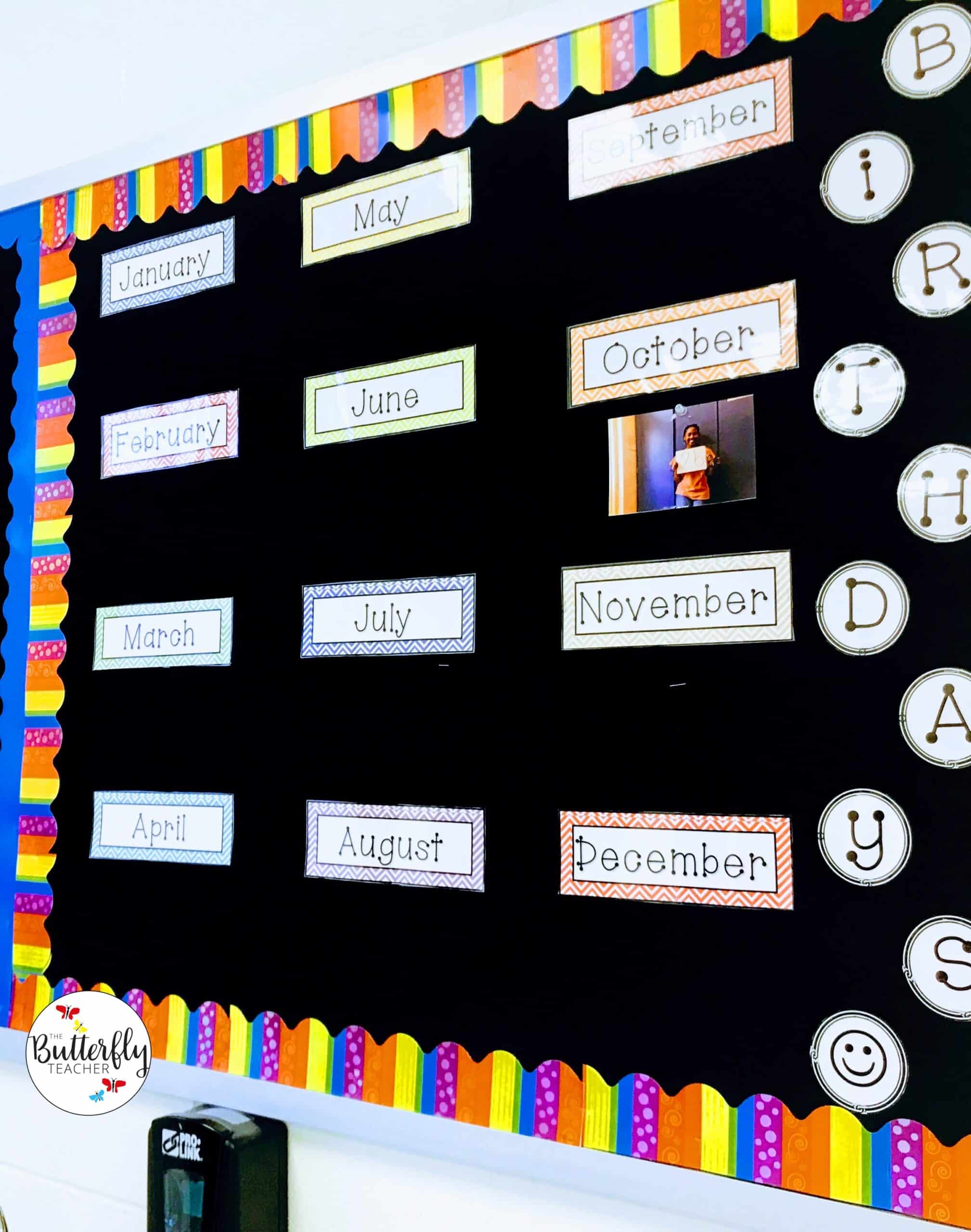
Have students move around the room to match up with other students who have a birthday in the same month.
I take this a step further and take a picture of students in their birthday groups holding a whiteboard with the day for their birthday. Then I get the pictures developed and use this as our class birthday bulletin board that stays up all year.
You can use the same one for free here ⬇️
10. Guess Who?
Students write down a fun fact about themselves on index cards–like these colorful ones. 🌈 You read the facts aloud, and the class guesses who it is.
This one is engaging, easy to prep, and surprisingly effective.
11. Emoji Check-In
Students choose an emoji that matches how they feel. You can have emoji stickers out or min plush emoji pillows for students to choose from.
This quick activity supports connection and emotional awareness. I especially like using it during morning meeting or after long weekends.


12. All About Me Bag or Item Share
Students share one item from home or one detail that says something about them.
It keeps sharing personal but manageable, and you can easily adapt it for different grade levels.
13. Classroom Polls
Ask fun questions and let students vote.
Try prompts like favorite recess game, favorite season, or favorite school lunch. It is an easy way for students to see what they have in common.
When I used this as an ice breaker activity, I paired it with Plickers so that students could vote easily, then see the graph results on our class Smartboard.
14. Quick Sketch About Me
Students draw a few things that represent them. Ice breakers like this work really well after a high-energy transition like coming back from recess. It gets students seated and calm quickly.
This is also perfect for students who are hesitant to talk right away. Or for kids who feel anxiety with activities that require the whole class to move around at once.
Later, they can use their sketch as a discussion starter with a partner or small group.
15. Get-to-Know-Me Name Tent
Students create a name tent with their name and a few details about themselves.
This helps everyone learn names faster and gives you a quick peek into student interests. If you want a ready-made version, this is a great time to use a printable name tent resource below ⬇️.

Tips for Making Ice Breakers Go Smoothly
Ice breakers work best when they are structured and brief. You do not need to fill an entire class period with them.
Here are a few teacher-tested tips:
• Model the activity first
• Keep directions short and clear
• Set behavior expectations before students begin
• Let students share with a partner before whole-group sharing
• Choose structured activities during the first week
• Keep timing tight so students stay focused
When I was in the classroom, I found that 5 to 10 minutes was often the sweet spot. Long enough to connect, but short enough to keep the energy positive.
When to Use Ice Breakers
Ice breakers are not only for the first day of school. They can be used anytime students need help reconnecting. So feel free to whip them out after long breaks or even for indoor recess time.
Here are some great times to use them:
• First day or week of school
• After winter break or spring break
• When a new student joins your class
• Before group work
• During morning meeting
• After a classroom reset or tough week
In my consulting work, teachers often tell me they forget ice breakers can be useful later in the year too. But they absolutely can! A quick community-building activity can shift the mood of the room faster than we think.
How to Keep Ice Breakers From Feeling Awkward
The best way to avoid awkwardness is to keep things light, simple, and low-pressure. Students should feel invited to participate, not forced into a spotlight.
Try these ideas:
• Start with easy questions
• Avoid overly personal prompts
• Use movement in a structured way
• Let students talk in pairs first
• Keep the tone fun and casual
• Give students examples before they answer
If you have a class with several shy students, begin with nonverbal or low-risk options like Classroom Polls, This or That, or Quick Sketch About Me. Those activities still build connection without creating stress.
What are the best ice breakers for teachers?
The best ice breakers for teachers are simple, low-prep, and easy to manage. A few favorites are Classmate Scavenger Hunt, Would You Rather, Name and Favorite, and Partner Interview. These activities help students connect quickly without requiring lots of materials or complicated directions.
What are fun ice breakers for elementary students?
Fun ice breakers for elementary students usually include movement, partner talk, or creative sharing. Four Corners, This or That, Guess Who, and Quick Sketch About Me all work well. These activities keep students engaged while still giving them structure and support.
How long should ice breakers take?
Most ice breakers should take about 5 to 10 minutes. That is usually enough time to help students interact and settle in without losing focus. Shorter activities often work best during the first week of school or as part of morning meeting.
Are ice breakers only for the first day of school?
No, ice breakers can be useful all year long. They work well after long breaks, when welcoming a new student, before starting group work, or anytime your class needs a community reset. They are a simple tool for reconnecting students.
What are low-prep ice breakers for teachers?
Some of the best low-prep ice breakers are Name and Favorite, Four Corners, This or That, Would You Rather, and Classroom Polls. These can be done with little to no prep, and they still help students talk, laugh, and find common interests quickly.
Want More First Week of School Ideas?
Ice breakers do not need to be elaborate to be effective 💛
Sometimes we put so much pressure on ourselves to make the first week magical that we forget the real goal is connection. And connection usually starts with simple things: a question, a laugh, a partner chat, a chance to move around the room.
If you want more ways to make the first day of school smooth and fun, here ⬇️ you’ll find several gems.
Choose a few favorites, keep them in your back pocket, and reuse them when needed. That is often what works best for building a strong classroom community.
Have a favorite go-to ice breaker for your classroom? Share it in the comments—I’d love to hear what works for you 😊
