



Want to know the cure for an entitlement mentality? Gratitude! Here I share the top ways that gratitude improves classroom environment.
PLUS, you can grab a FREE graphic organizer to use in your class this week!
No matter what type of school you work in or what grade level you teach, the practice of gratitude can help build a positive classroom environment for teachers and students.

This post may contain affiliate links to Amazon for your convenience. As an Amazon Associate, I earn from qualifying purchases, which do not cost any extra for you. Please see the full disclosure here.
Why Teach Gratitude to Kids?
Nothing is more frustrating than spending so much time planning fun, engaging activities for students only to have them fight, argue, whine, or spend the time tattle-telling on each other!
Student misbehavior and negative attitudes can derail our best activities and plans.
It’s also discouraging to hear students being mean, rude, and ungrateful to one another throughout the school day.
November ignites everyone’s desire to practice thankfulness and gratitude. But I have seen with my own eyes the amazing benefits of gratitude that extend far beyond Thanksgiving activities in the classroom.
Gratefulness means having an appreciative attitude for what one has received.
One of my favorite authors, Lynn Twist, says in her book The Soul of Money: “What you appreciate, appreciates.”
When teachers intentionally practice and teach an attitude of gratitude in the classroom, the full classroom environment is improved for everyone!
Here are the ways gratitude enhances classroom environment for you and your kiddos.
Gratitude Ignites Kindness Among Students
One part of gratitude’s definition is “readiness to show appreciation for and return kindness.” Student reflection on good things leads to good feelings. This boost in mood encourages students to be kind.
When students feel left out or rejected, they tend to lash angrily against others. This makes group work or team learning games hard for everyone.
Each time I’ve led my students in a moment of grateful reflection, they show more compassion and kindness to each other.
I cannot tell you how many “incidents” we’ve had with our boys playing competitive sports during recess! Practicing gratitude in the classroom has helped my boys be more kind and have more fun playing at recess.
Teacher-Student Relationships Improve with Gratitude
The most effective way to practice gratitude in the classroom is to model it as a teacher.
Every single Thursday of the entire school year, I lead my students through a Thankful Thursday gratitude activity.
It takes about 10 minutes to complete. As students unpack for the day, they fill out a sticky note on things they are thankful for that Thursday. I challenge them to not write the same things each week.
As I model this, I am intentional to list and share things about THEM that I am thankful for. So many students just light up when I tell them why I am thankful for them.

I also love leaving unexpected encouragement notes on their desks! Students want to know that they are appreciated and loved. Their attitude about being in the classroom improves drastically when they KNOW that they are safe and cared for.
That reminds me of my favorite quote on classroom management: “Rules without relationship equals rebellion.”
Showing gratitude for your students inspires them to be more grateful. This fosters a strong positive teacher-student relationship.
Gratefulness Enhances Learning
For me, the most surprising side-effect of cultivating an atmosphere of gratitude has been the boost in academic learning. Remember that gratitude leads all of us to focus more on the good.
This positive shift in thinking builds a strong sense of self inside of students. This makes them want to try harder to be successful in the classroom.
I have also noticed that feeling appreciated and loved makes students more willing to take risks in learning. Our class discussions, literacy centers, and overall learning time are enhanced when we have an on-going practice. This is just another effective way that gratitude improves classroom environment.
More Reasons To Teach Gratitude in the Classroom
Here are other ways that I’ve seen gratefulness impacting the classroom environment:
- Gratitude helps students see the good even in bad situations.
- Class field trips more meaningful when students show appreciation for them.
- Parents appreciate you more for helping their kids be more appreciative.
- Teachers also feel a lift in positive moods when they practice being thankful.
Gratitude Writing Freebie for the Classroom
You may be saying to yourself, “This sounds great, but how in the world do I get started?!”
I’m so glad you asked teacher friend!
Here’s a gratitude writing activity you can use in your classroom this week to kick-start an atmosphere of thankfulness.
Gratitude and Thanksgiving Read-Alouds for Your Class
One of the simplest ways to weave gratitude into your classroom routine is through picture book read-alouds. Gratitude-themed books open up thoughtful discussions, spark reflective journaling, and offer daily reminders for students to appreciate the big and small things in life.
These read-alouds create a positive tone that makes your classroom feel like a safe and caring space. When used consistently, they support social-emotional learning and gently reinforce that gratitude improves classroom environment in lasting ways.
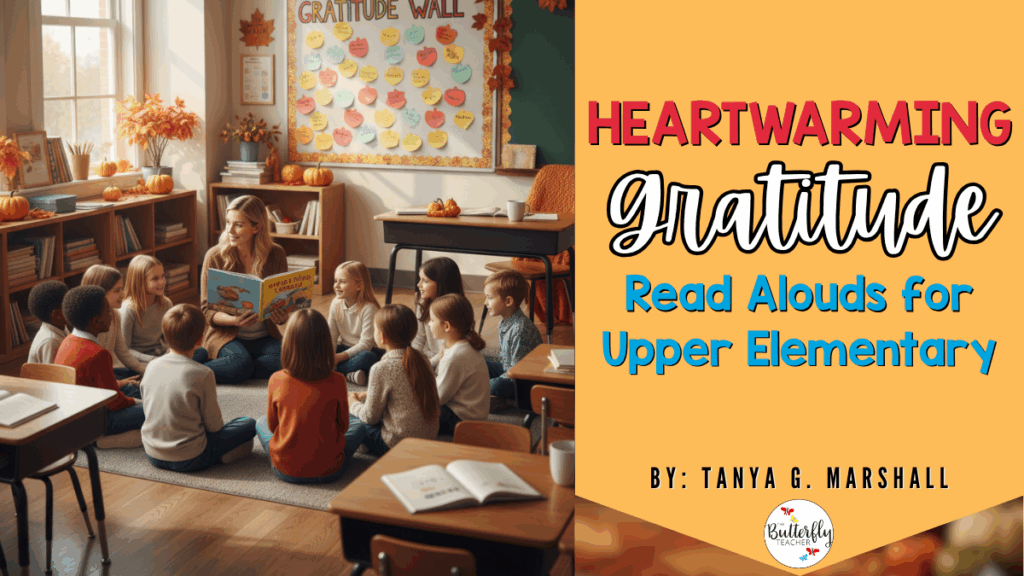
Some gratitude books go a step further by including historical context about Thanksgiving. This bonus allows you to naturally incorporate a bit of history while still focusing on character-building.
Whether you read these books during morning meetings, transitions, or right after recess, they help build a culture of appreciation that benefits your whole class. If you’re looking for specific gratitude book recommendations, I’ve shared my favorites in the full post linked above. Click the image to see the list.
Frequently Asked Questions About Teaching Gratitude in the Classroom
Why is it important to teach gratitude in elementary school?
Gratitude helps young students build emotional awareness and positive social skills. When scholars learn to recognize what they’re thankful for, they become more respectful, empathetic, and cooperative—leading to fewer disruptions and more meaningful classroom connections.
How does gratitude improve classroom environment?
Gratitude improves classroom environment in multiple ways. The practice helps shift student focus from frustration to appreciation. This doesn’t mean every problem disappears, but it creates a more supportive, solution-focused tone in your classroom. Students are more likely to encourage each other, take responsibility, and contribute positively when gratitude is part of your daily rhythm.
What are some easy ways to teach gratitude in class?
Some of the simplest strategies include daily gratitude journals, compliment circles, gratitude anchor charts, and morning meeting shout-outs. Gratitude read-alouds and seasonal writing prompts are also engaging ways to make it stick.
Can gratitude be taught without taking too much time from academics?
Absolutely. Gratitude doesn’t have to be a separate subject. It can be woven into your morning meetings, transitions, writing block, or exit tickets. Even just 2–3 minutes a day can make a big impact on student mindset and behavior.
What if students aren’t used to expressing gratitude?
It’s totally normal for some kiddos to be shy or unsure at first. The key is modeling it yourself and celebrating even the smallest expressions of thanks. Over time, gratitude grows with consistency and encouragement.
Interested in Cultivating More Thankfulness in Your Life?
Gratitude improves classroom environment, but it also enhances mental health and emotional well-being. Which is why I cultivate gratitude in and outside of the classroom.
My personal life has been topsy-turvy, so I need consistent and practical ways to stay emotionally healthy.
Whether you want to bring more mindfulness in your classroom OR just cultivate gratitude for yourself, this will help. 👇🏾
This video walks you through how (and why) I practice gratitude journaling.
Do you practice gratitude in your classroom or personal life? If so, I would really love to hear about it in the comments below!
Plus, be sure to pin this post for later. 🙂
