


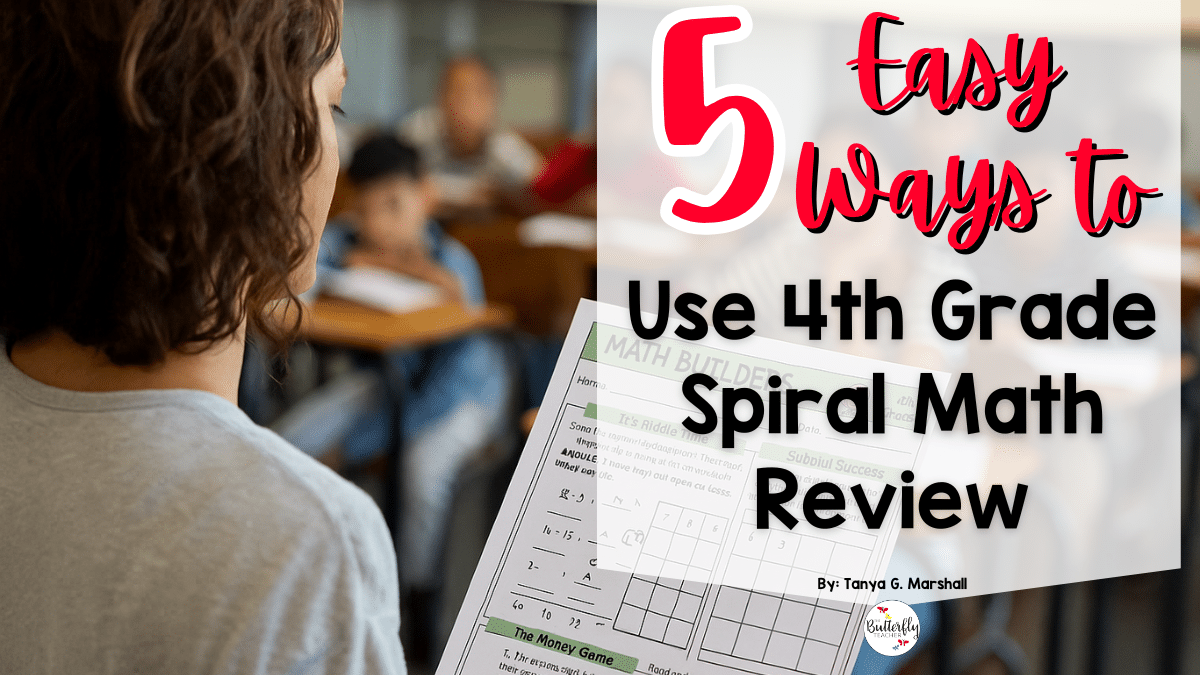
If you’re looking for creative, low-lift ways to use 4th grade spiral math review in your classroom, this post is for you. I’ll share five of my favorite ways to use spiral review with fourth-graders, plus offer tips on grading and differentiation to make the routine even smoother.
Spiral math review is one of those golden teacher tools that can do so much with just a little structure. Whether you’re using it to help your students retain skills, build math confidence, or just get their brains warmed up, it’s one of the simplest ways to add consistency to your math block.
And the best part? It doesn’t require tons of prep. 🙌 By the end of this post, you’ll be able to grab some free 4th grade spiral math review worksheets so you can implement some of these ideas.
This post may contain affiliate links to Amazon for your convenience. As an Amazon Associate, I earn from qualifying purchases, which do not cost any extra for you. Please see the full disclosure here.
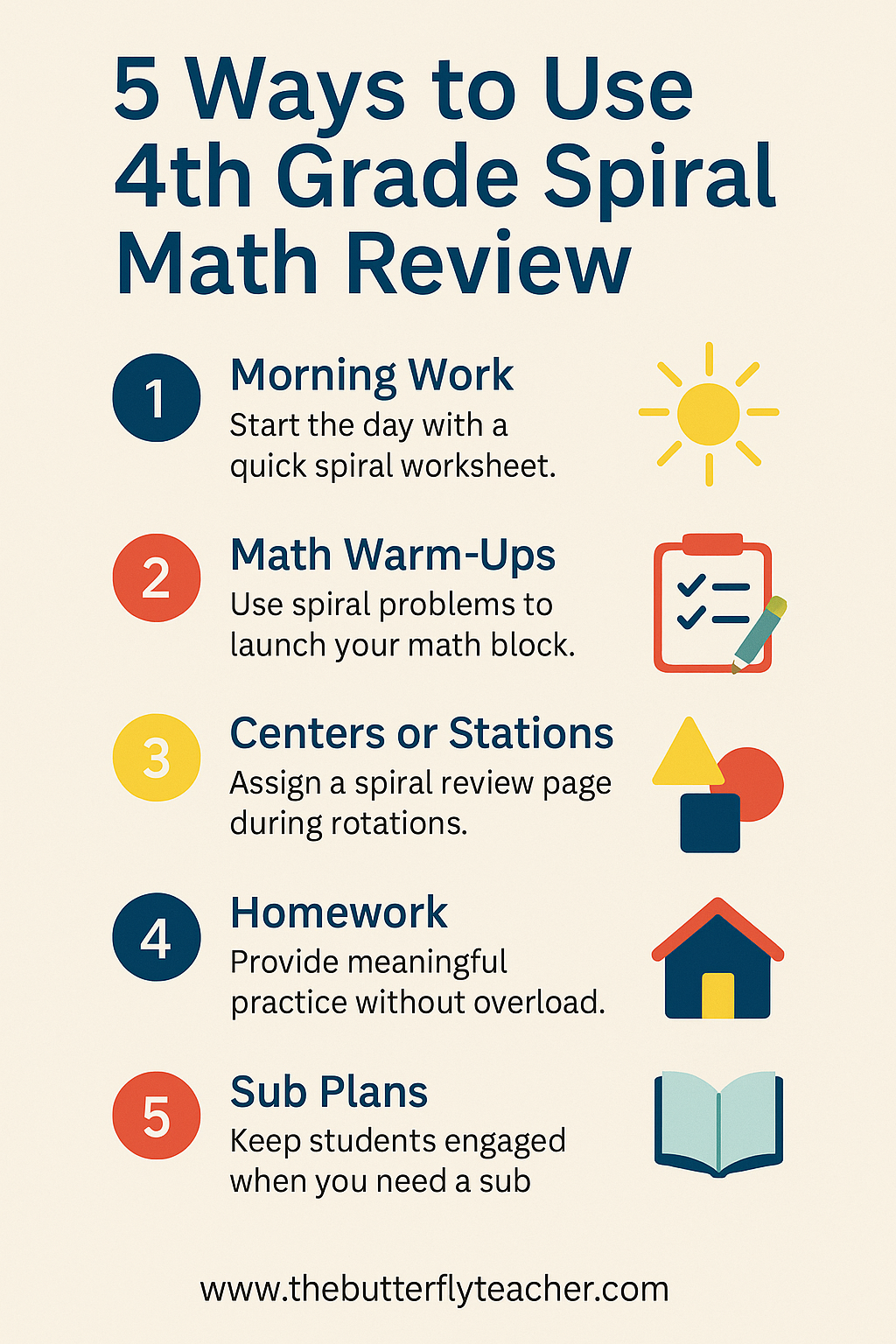
1. Morning Work That Sets the Tone
There’s something magical about the hum of students quietly working as you take attendance, greet students, and ease into the day.
That’s where 4th grade spiral math review makes the perfect morning work!
Each day, students complete one page or half a page of a spiral review worksheet. It gives them a sense of routine, and it gives you a chance to see how well they’re holding onto essential math skills.
A few teacher-tested tips:
- Project one problem at a time and talk through it together
- Keep a basket of laminated copies with dry erase markers for reusable practice
- Pair morning work with a timer to help students manage time and stay focused

Whether you check it together or collect it later, you’re kicking off the day with math thinking already happening.
2. Math Warm-Ups That Reinforce Key Concepts
4th grade spiral math review is also a fantastic way to jumpstart your math block. Instead of launching straight into new content, start with a quick 5–10 minute review from the spiral packet.
This gives your students a chance to revisit prior concepts—like multi-digit multiplication or fraction comparison—before adding something new to their plate.
What this could look like:
- Use one row of problems from the worksheet as a warm-up
- Focus the review on a skill that connects to that day’s main lesson
- Use student work to drive quick partner discussions or to help you plan your next math whole-class review
Warm-ups like these keep skills fresh and help you spot misconceptions early.
3. Centers or Stations Without Extra Work
Need a math center that doesn’t require cutting, laminating, or constant upkeep? Spiral review to the rescue!
Print a few copies of a spiral review page and let students work independently or with a partner. With answer keys included, students can even check their own work.
This is especially helpful for:
- Independent math stations
- Small group rotations
- Early finisher work
- Tech-free centers when you’re short on devices
Pairing your 4th grade spiral math review worksheets with 4th grade math centers targeting the same skills offers a double bonus!

Your kiddos get hands-on practice with a built-in early finisher page when you use both during your math block.
Plus, the predictable format helps students feel confident and successful during independent time.
4. Homework That Isn’t Just Busywork
Let’s be honest: homework should be meaningful, not just more paper to fill time.
Speaking of time, if you’re following the recommended 10-minute rule for homework, then your 4th graders should not have more than 40 minutes of homework across all subject areas.
4th grade spiral math review makes a great choice for homework because it targets essential standards without overwhelming families and taking too much time.
Each page hits multiple skills—like place value, division, fractions, and word problems—so students are getting variety and repetition.
Ideas for simplifying homework with spiral review:
- Send home 1 page per week (not every night!)
- Use it as a choice board option
- Offer a “challenge row” for students who want extra practice
This approach keeps review ongoing without adding stress at home.
5. Sub Plans That Practically Run Themselves
When you’re out, you want peace of mind that your class is still learning—without leaving the sub 10 pages of instructions. Enter: spiral math review.
Leave a few pages in your sub binder with notes like:
“Students can complete this independently. If time allows, review answers as a class.”
It works great for:
- Full day sub plans
- Emergency last-minute absences
- Short blocks of time with a guest teacher
Spiral review gives you confidence that math learning continues even when you’re not there.

Differentiation with 4th Grade Spiral Math Review
One of the most powerful benefits of using spiral math review is how easily it can be differentiated.
Every classroom has a mix of learners—some who need more time with place value and others ready to tackle advanced problem-solving. This is where spiral math review shines!
Ideas for differentiation:
- Assign specific rows based on ability level
- Use it for small group intervention or extension
- Allow students to choose which problems to solve
- Add a challenge question to the back of the page for enrichment
If you’re looking for even more ideas, check out this post on Ways to Differentiate Spiral Math for actionable tips you can start using right away.
Grading Tips for Spiral Review
If you’re using spiral review daily, grading everything might feel overwhelming. But it doesn’t have to be!
Here are some easy grading ideas:
- Spot-check one row per page instead of every problem
- Grade just one skill focus each week (like fractions or place value)
- Use spiral review as a participation or completion grade
- Let students self-check with answer keys for instant feedback
- Turn a completed page into a quick math conference to talk through mistakes
You can also keep a “review folder” or portfolio where students collect their spiral pages and reflect on progress at the end of the week.
For more tips on how spiral review leads to long-term mastery, check out Spiral Math Review Success and Mastery and Transforming Spiral Math Review Results.
❓ FAQ: 4th Grade Spiral Math Review
1. What is spiral math review in 4th grade?
Spiral math review gives students ongoing practice by revisiting previously taught math skills on a regular basis. It reinforces concepts like multiplication, fractions, place value, and word problems to help build long-term retention.
2. How often should I use spiral review in my classroom?
Ideally, daily! But even 2–3 times a week can be effective. Many teachers use it for morning work, math warm-ups, or quick review before new lessons.
3. Is spiral math review good for test prep?
Absolutely. Because it covers multiple standards over time, spiral review helps students retain concepts and boosts confidence before end-of-year assessments.
4. Can spiral review be used for differentiation?
Yes! You can assign different pages or rows based on student needs, use it for enrichment or intervention, or allow students to self-select problems that match their level.
5. What’s the best way to grade spiral math review?
Keep it simple—spot-check a few problems, grade for completion, or let students self-check with answer keys. It doesn’t need to be a heavy grading task.
Spiral math review is such a simple way to reinforce learning and build math fluency all year long. Whether it’s morning work, warm-ups, centers, or homework—it flexes with your schedule and supports your students where they are.
Looking for a ready-made option? I created a 4th grade spiral math review resource with 50 print-and-go worksheets, a digital Google Slides version, and built-in answer keys to make grading easier. It’s aligned to 4th grade standards but also great for 5th grade intervention or advanced 3rd grade practice.
🙌 Try it out with your students by grabbing a free sample page here!
Once you sign-up for this freebie, you’ll be added to our weekly teacher newsletter to receive even more resources and tips for your classroom.
For even more classroom inspiration, don’t miss this post packed with Upper Elementary Spiral Math Ideas.
Which idea are you excited to try first? Let me know in the comments!
🛒 4th Grade Spiral Review Resources:
These spiral review sets for Math and ELA are designed to fit all 5 of the easy ways you use spiral worksheets in your classroom.
Absolutely no-prep with versatile layouts and options. Plus the bundle saves you 30% off the price! They are all available in on this site in The Butterfly Teacher shop or in The Butterfly Teacher’s store on TPT (Teachers Pay Teachers).


You can click on any image to see more details about these standards-aligned spiral review resources formatted specifically for 4th graders.
OR if you have 5th graders who need more intervention and review of 4th grade concepts, you can grab these review worksheets–which come with and without the grade level listed at the top.
Not having the grade level gives you the flexibility to use these pages with different grade levels.