

Why Teachers Need a Spiral Binding Machine 🧵
If you’ve ever waited in line at the teacher workroom just to bind one set of materials, you already get it.
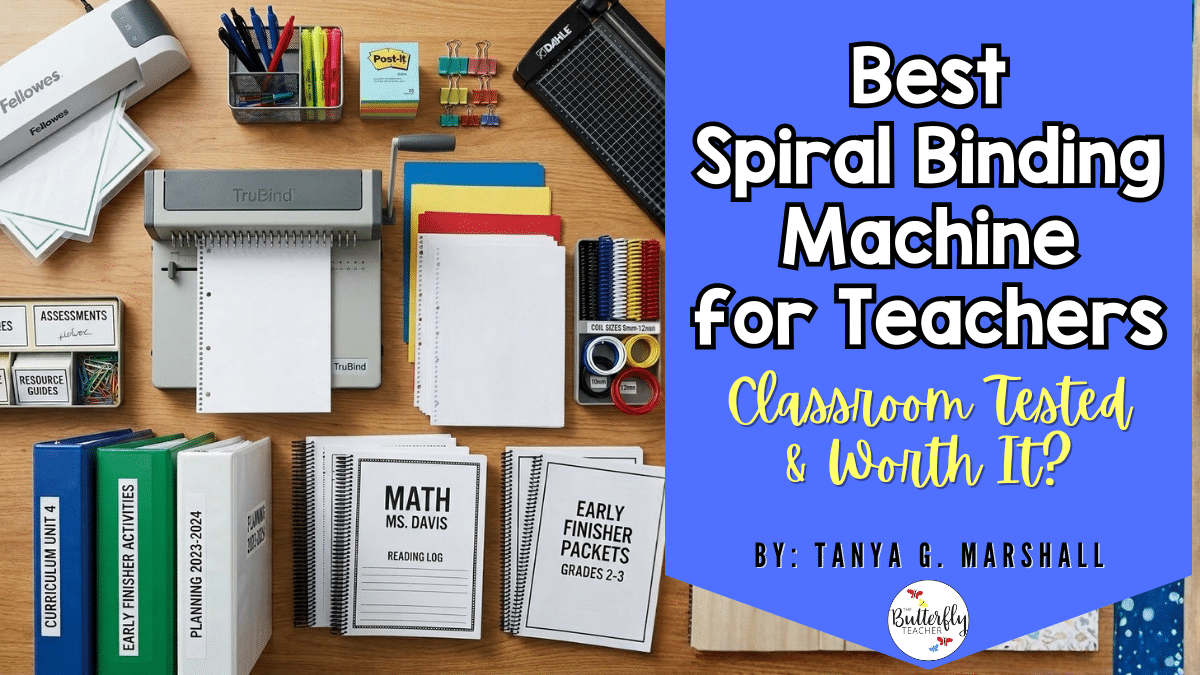
In my classroom, I was constantly printing and organizing things like:
- Writing publishing units
- Early finisher packets
- Curriculum binders
- Sub binders
- Intervention materials
- Summer prep resources
And every time, binding became the bottleneck.
That’s exactly why I started looking into the best spiral binding machine for teachers. Not as a luxury, but as a way to save time and stay sane during busy weeks.
I personally bought my own spiral machine, laminator, and printer for convenience. It completely changed how I prep. I can bind what I need, when I need it, without leaving my room.
No more waiting. No more rushing during planning time. 🔥
For me, it came down to this. Time matters more than anything else in the classroom.
This post may contain affiliate links to Amazon for your convenience. As an Amazon Associate, I earn from qualifying purchases, which do not cost any extra for you. Please see the full disclosure here.
What You’ll Find in This Post
Should Teachers Have to Buy Their Own Binding Machine? 🤔
Short answer. No. Schools should provide essential tools like binding machines.
In reality, many teachers share one machine in the workroom. That often leads to:
- Long lines during peak times
- Limited access during short planning periods
- Rushed prep or unfinished materials
This is where the conversation shifts. While schools should supply them, the day-to-day pressure makes many teachers look for their own solution.
I started researching the best spiral binding machine for teachers because I kept losing time waiting. That time adds up fast over a week.
There are also ways to avoid paying out of pocket:
- Apply for classroom grants
- Ask your PTA for funding support
- Share the cost with a grade-level team
Still, there are situations where buying your own makes sense. If you bind often, prep during summer, or create resources regularly, then your own binding machine can quickly become a practical investment, not an extra expense. 🎯
How We Chose the Best Spiral Binding Machine for Teachers 🔍
Not all machines work well in a busy classroom. I focused on what actually saves time and holds up during real use.
Here’s what I looked at when narrowing down the best spiral binding machine for teachers:
- Cost – You need something affordable, especially if you are buying it yourself. ⭐
- Punch capacity – Higher punch capacity means fewer passes and faster prep. 📈
- Coil size compatibility – It should handle different book thicknesses for varied classroom needs. 📏
- Electric vs manual – Manual works for occasional use. Electric helps with batch prep. ⚡
- Durability – Classroom tools need to last all year without issues. 💪
- Ease of use – You should be able to set it up and use it without a learning curve. 🚀
- Storage footprint – It needs to fit in your classroom space without taking over. 📦
- Safety – Important if students are nearby or helping. ⛑️
- Time efficiency – Every feature should help you prep faster. ⏱️
Spiral vs Comb vs Wire Binding: What’s Best for Teachers? 📊
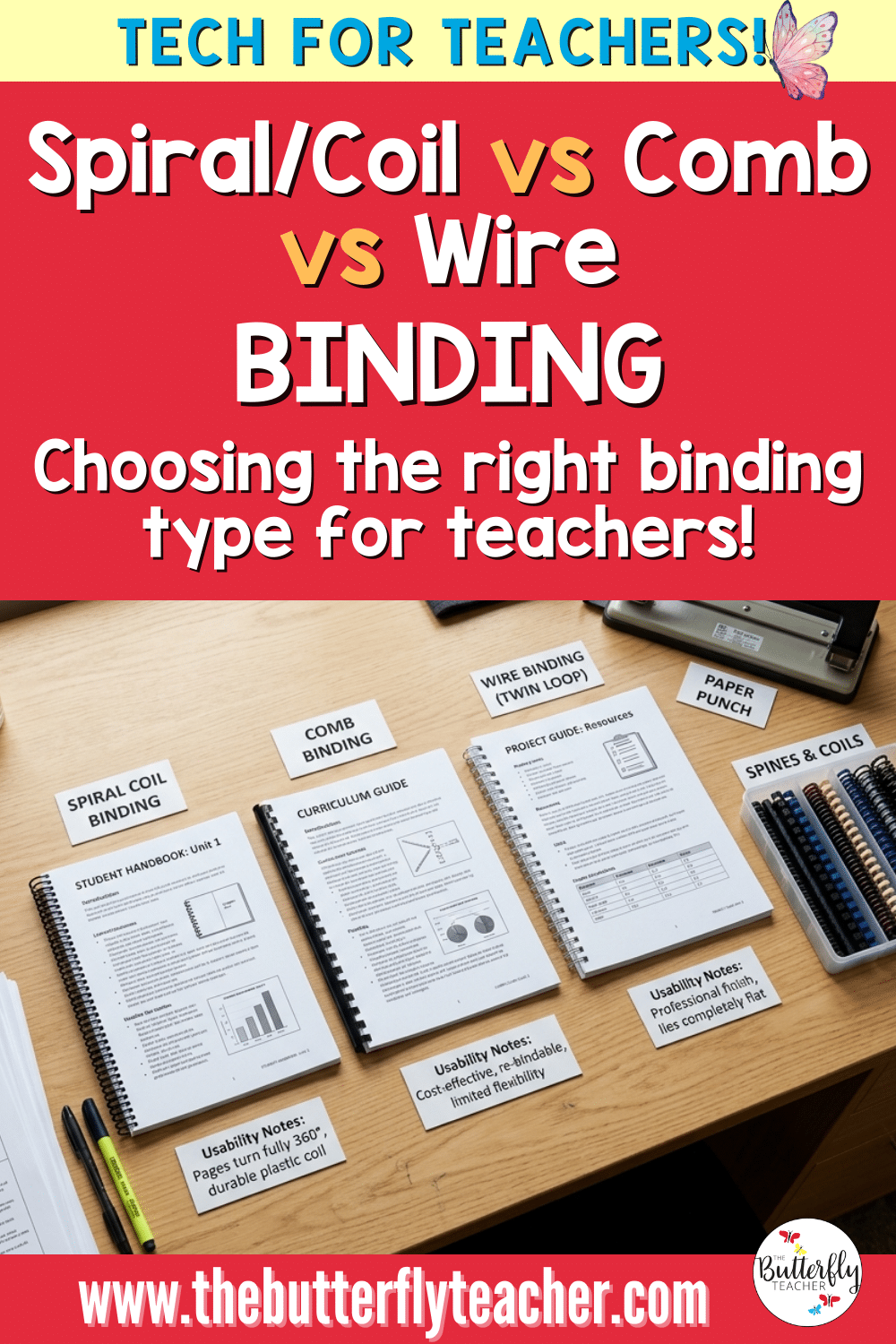
Choosing the right binding type depends on how you actually use your materials day to day. In a classroom, durability and ease of use matter more than appearance.
| Type | Best for… | Pros | Cons |
| Spiral/Coil | Student publishing | Durable, lays flat | Manual Insertion |
| Comb | Quick classroom packets | Easy to edit | Can pop open |
| Wire | Professional look | Sturdy | More expensive |
Spiral or coil binding is ideal for student use. Books lay completely flat, which makes writing easier during lessons, centers, or independent work. Pages also stay secure even with frequent handling.
Comb binding works well for materials you need to update often. You can reopen and add pages, which is helpful for evolving resources. The downside is that combs can pop open if students are rough with them.
Wire binding gives a clean, polished look. It’s better suited for presentations or admin documents, not everyday classroom use.
For most elementary classrooms, spiral or coil is the most practical choice. That’s why many teachers consider it the best spiral binding machine for teachers when deciding what to use regularly.
9 Best Spiral Binding Machines for Teachers You Can Actually Use 📚
If you’ve been researching the best spiral binding machine for teachers, you’ve probably noticed one thing. There are a lot of options, and not all of them are classroom friendly.
This list mixes both spiral and comb machines. That gives you flexible options based on your budget and how often you bind.
Disclosure: As an Amazon Associate I earn from qualifying purchases. Images of the featured binding machines below are property of Amazon.

MAKEASY Spiral Binding Machine

- My personal machine. I bought this in 2019 and still use it today. Best feature is its reliability over time
- 🟢 Pros: affordable, lightweight, consistent results, great for everyday classroom use
- 🔴 Cons: manual coil insertion takes time for large batches
- Best for: teachers who want a dependable and budget-friendly option

Rayson SD-1501 Coil Binding Machine
- 12-sheet punch capacity with adjustable side margin. Best feature is clean alignment for student books
- 🟢 Pros: easy to use, good for publishing projects, decent control
- 🔴 Cons: lower punch capacity slows down big prep days
- Best for: moderate classroom use

TruBind TB-S20A Coil Binding Machine
- 20-sheet punch with heavy-duty metal build. Best feature is durability
- 🟢 Pros: strong construction, handles thicker stacks, adjustable depth
- 🔴 Cons: heavier, takes up more space
- Best for: upper elementary teachers making thick binders

Fellowes Pulsar+ 300 Comb Binding Machine
- 20-sheet punch and 300-sheet binding capacity. Best feature is beginner-friendly setup
- 🟢 Pros: easy to learn, smooth comb opening, widely available
- 🔴 Cons: comb bindings can open over time
- Best for: teachers comparing comb vs spiral options

Akiles CoilMac-M 41 Manual Coil Binding Machine
- 20-sheet punch with adjustable margin depth. Best feature is professional-level performance
- 🟢 Pros: very durable, precise punching, great for frequent use
- 🔴 Cons: higher cost, heavier unit
- Best for: teachers who bind often

GBC CombBind C12
- Compact and beginner friendly. Best feature is portability
- 🟢 Pros: simple to use, affordable, good for light tasks
- 🔴 Cons: real punch capacity feels closer to 3 sheets based on reviews
- Best for: occasional classroom use

TIANSE Comb Binding Machine
- 21-hole punch with up to 450-sheet binding. Best feature is value for price
- 🟢 Pros: budget friendly, solid capacity, adjustable margin
- 🔴 Cons: plastic parts may wear over time
- Best for: teachers wanting a low-cost comb option

Fellowes Galaxy E Electric Comb Binding Machine
- Electric punch system. Best feature is speed during batch prep
- 🟢 Pros: fast, reduces hand fatigue, consistent results
- 🔴 Cons: more expensive, larger footprint
- Best for: high-volume teachers or shared spaces

Binditek Spiral Binding Machine with Electric Inserter
- Manual punch with electric coil inserter. Best feature is faster coil insertion
- 🟢Pros: saves time, combines manual control with speed, efficient workflow
- 🔴 Cons: slightly higher price than basic manual units
- Best for: teachers who want to save time during prep
If you are comparing features and price, the best spiral binding machine for teachers depends on how often you bind and how much time you want to save. Some teachers need something simple and affordable. Others need speed and durability.
Quick Comparison Table
| Binding Machine | Punch Capacity (sheets) | Max Binding (sheets) | Manual / Electric | Best For | Price Range* |
| MAKEASY | 15-21 | 450 | Manual | Everyday classroom use | ~ $50 |
| Rayson SD-1501 | 12 | 300+ | Manual | Moderate use | $125 – $140 |
| TruBind TB-S20A | 20 | 400+ | Manual | Thick binders | $150 – $165 |
| Fellowes Pulsar+ 300 | 20 | 300 | Manual | Beginners | $160 – $200 |
| Akiles CoilMac-M 41 | 20 | 400+ | Manual | Frequent binding | $535 – $550 |
| GBC CombBind C12 | Up to 12 | 195 | Manual | Light use | $120 – $140 |
| TIANSE Comb Machine | 21 | 450 | Manual | Budget option | ~ $50 |
| Fellowes Galaxy E | 20 | 500 | Electric | High volume | $640 – $700 |
| Binditek Combo | 20 | 400+ | Manual Punch + Electric inserter | Time saving | ~ $180 |
*Disclaimer: Prices may vary on Amazon depending on availability and promotions at the time of purchase.
When you look at long-term use, the best spiral binding machine for teachers is the one that saves you time and holds up through the school year. The best binding machine is not always the most expensive one. It is the one you will actually use every week.
Is a Spiral Binding Machine Worth It for Teachers? 💡
This really comes down to how you use your time.
For me, the best spiral binding machine for teachers paid off quickly because it removed one of the biggest time drains in my workflow.
🕒 It saves time if:
- You prep materials during summer
- You want to avoid workroom lines
- You regularly create early finisher packets
- You bind intervention materials often
- You sell resources on TPT
When you do these consistently, having your own setup changes everything. You stay in control of your schedule and prep when it works for you.
💸 Cost breakdown example:
- Print shop binding costs about $4 to $6 per book
- If you bind 30 books in a year, that’s $150 or more
- A one-time purchase of the best spiral binding machine for teachers can cover that cost quickly
If you bind often, this is less about convenience and more about efficiency.
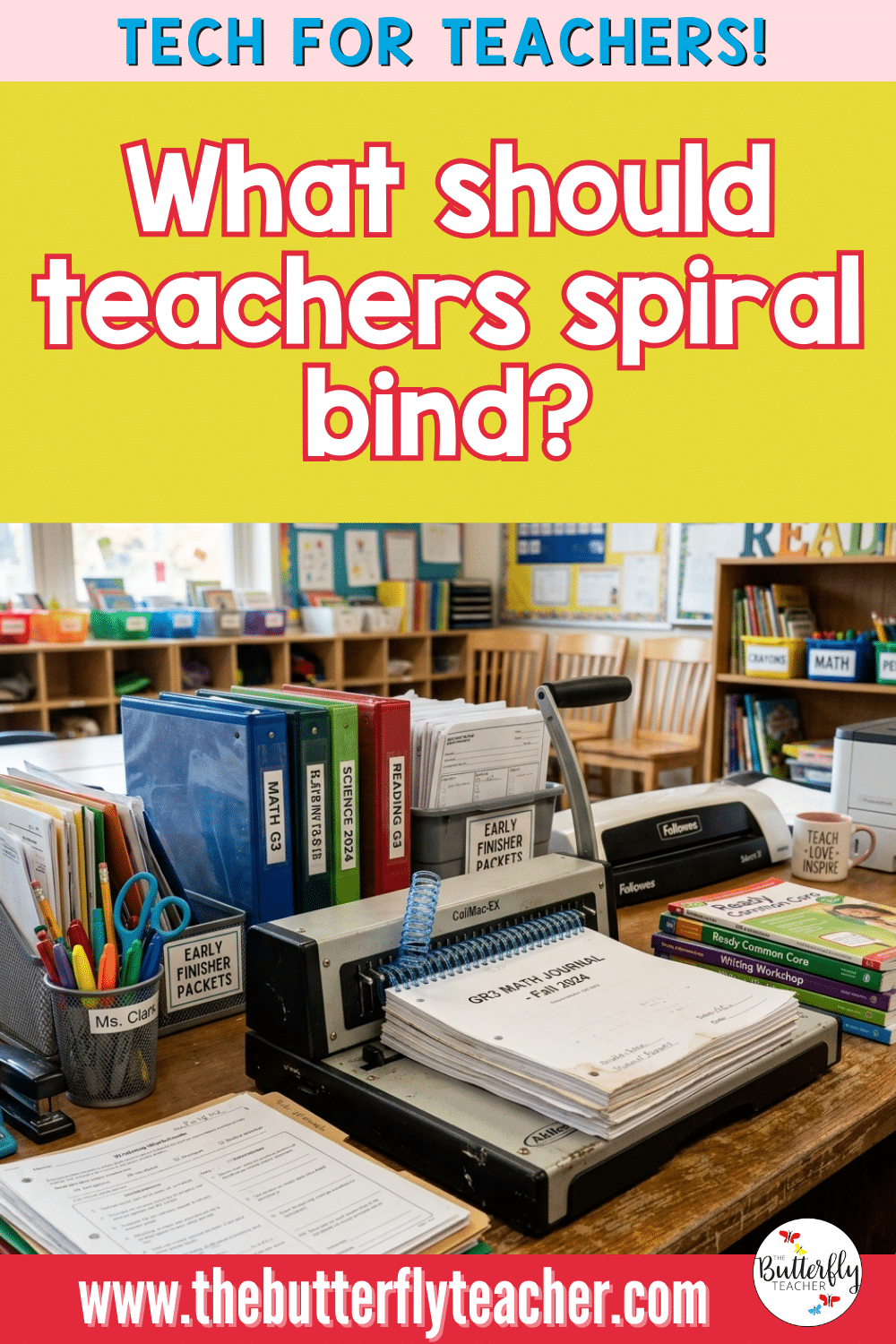
What Should Teachers Spiral Bind? 📘
Once you have the best spiral binding machine for you, the next question is what to actually use it for. Here are the materials I bind the most in my classroom:
- Student publishing books – Great for final drafts. Students feel proud seeing their work in a real book format.
- Early finisher packets – Keeps fast finishers engaged. I use my Year Long Early Finisher Activity Packet so everything stays organized in one place.
- Writing workshop units – Binding lessons and printables makes daily instruction smoother. I do this with my writing workshop units from my TPT store.
- Math intervention bundles – Perfect for small group work. I bind my Math Games bundle so pieces stay together and ready to use.
- Curriculum maps – Helps you stay on track. Easy to flip through during planning.
- Sub binders – Everything a substitute needs in one spot. No loose papers to manage.
- IEP documentation binders – Keeps important records secure and easy to access.
- Morning work packets – Students build routines faster. I use my Spiral Math and ELA Morning Work bundles for this.
- End of year memory books – A simple way to create lasting keepsakes for students.
- Classroom procedures manuals – Helpful for both you and your students to stay consistent.
When you use the binding machine regularly, it supports your systems and makes your resources easier to manage.
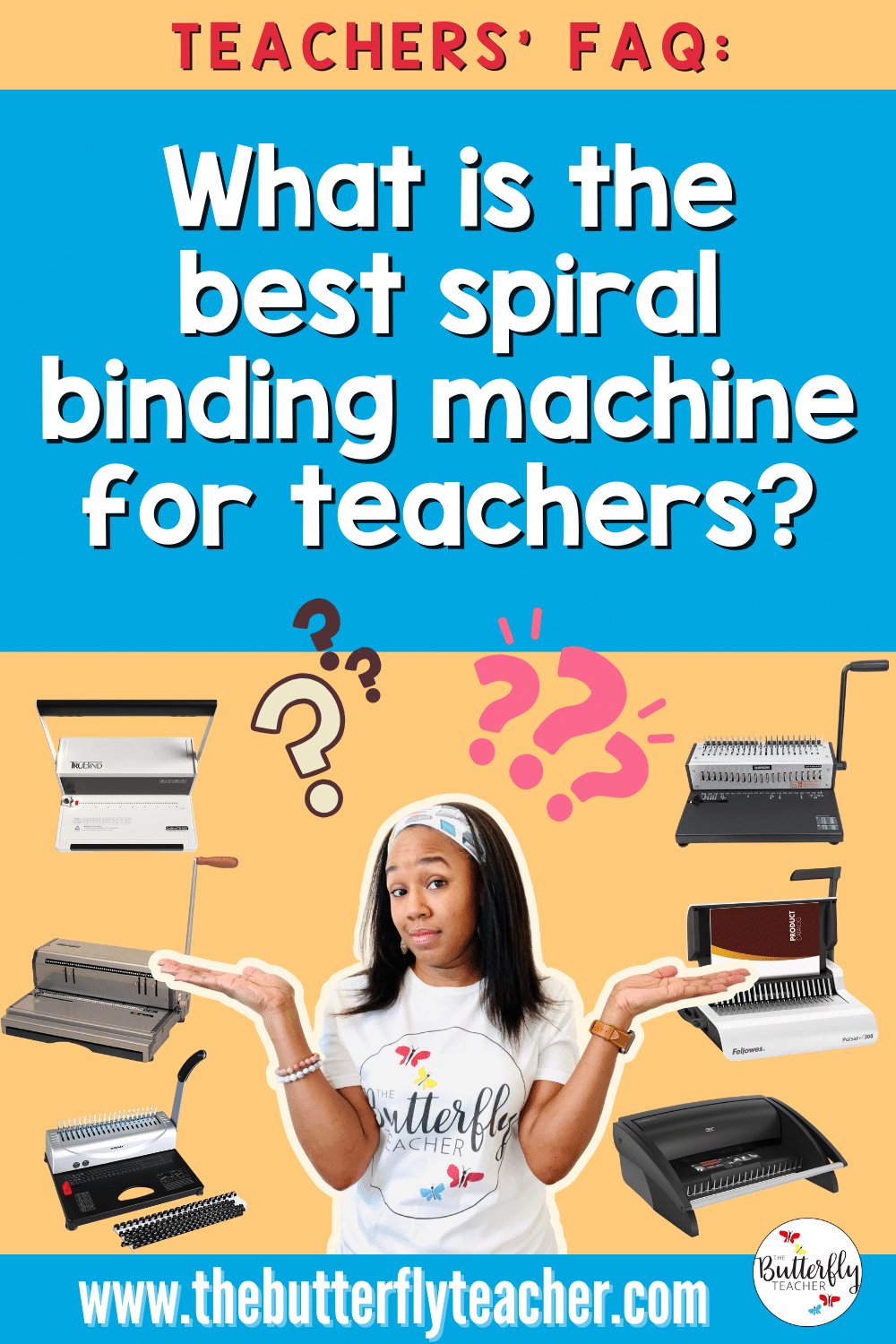
FAQs About Spiral Binding Machines for Teachers ❓
What Is the Best Spiral Binding Machine for Teachers? 🏆
The best spiral binding machine for me depends on how often I plan to use it. If I bind every week, I need a durable machine with a higher punch capacity and smoother coil insertion. For regular classroom use, a sturdier model saves time, frustration, and replacement costs.
Is Spiral Binding Better Than Comb Binding? 🤔
In my experience, spiral binding is better for classroom materials that need to last. It is more durable, pages turn more smoothly, and books lay flat, which makes writing easier for students. Comb binding is easier to edit, but spiral binding usually holds up better over time.
How Many Pages Can a Coil Binding Machine Handle? 🧵
A coil binding machine can handle different page counts depending on the coil size I use. Smaller coils usually hold around 20 to 40 pages, while larger coils can bind 300 to 400 pages or more. The machine matters, but coil size is what really determines capacity.
Are Binding Machines Hard to Use? 💡
Most binding machines are easier to use than they first appear. Once I practice punching pages, aligning covers, and inserting the coil a few times, the process becomes quick and manageable. A beginner-friendly machine can help me make polished classroom books without a steep learning curve.
Can Students Use a Spiral Binding Machine Safely? 🤔
I would not let students handle the punching part of a spiral binding machine without direct supervision. Older students may be able to help insert coils or turn the crimper carefully. For safety, I always recommend that the teacher manage the punching step and final assembly.
Is It Cheaper to Bind Books at School or at a Print Shop? 👌
For me, binding books at school is usually cheaper over time if I make class sets, student journals, or teacher binders often. A print shop may cost less for occasional projects. If I bind materials regularly, owning my own machine is usually the better value.
What Size Coil Do I Need for Classroom Books? 🌀
The right coil size depends on how many pages I need to bind. For example, a 1/4-inch coil usually works for about 20 to 40 pages, while larger coils fit thicker books. I always match the coil size to the finished page count for the best results.
Keep Your Classroom Systems Running Smoothly 📚
If this topic helped you think through your setup, here are a few more posts you might want to check next. These connect directly to how you plan, organize, and manage your classroom day to day. ✨
Writing Workshop Ideas
Tech for Teachers Series
- Best Label Makers for Teachers
- Best Laminators for Teachers
- Best Scanners for Teachers to Digitize Student Work and Old Resources
- Best Bluetooth Speakers for Teachers Who Use Music and Audio in Lessons
- Best Small Printers for Teachers Who Work from Home or in Tiny Classrooms
- Best Classroom Document Camera for Teachers
- Best Classroom Pencil Sharpeners
Classroom Organization
- Creative and Interesting Classroom Management Tools for Teachers
- Teacher Desk Organization Accessories and Ideas
- Creative Classroom Whiteboard Organization Ideas for Upper Elementary