



Teaching Lent to upper elementary students can feel a little intimidating. We want to be respectful. We want to be accurate. And let’s be honest—we also want something that won’t take hours of prep or feel too heavy for our kiddos.
That’s exactly why I love using Lent activities for kids that are hands-on, thoughtful, and developmentally appropriate. When Lent is taught in a clear, kid-friendly way, it becomes a meaningful season of reflection instead of a confusing list of rules.
This post is for upper elementary teachers, homeschool families, and anyone teaching kids during the Lent season, including Sunday School or Bible study leaders. I’m sharing simple, classroom-tested ideas that help kids understand why Lent matters and how it prepares their hearts and minds for Easter—without things feeling overwhelming or legalistic.
This post may contain affiliate links to Amazon for your convenience. As an Amazon Associate, I earn from qualifying purchases, which do not cost any extra for you. Please see the full disclosure here.
What Is Lent, and How Can You Explain It to Kids?
Lent is a 40-day season when Christians prepare their hearts for Easter through reflection, prayer, and intentional choices. For kids, Lent can be explained as a time to slow down, think about Jesus’ life, and practice growing in love, kindness, and self-control.
As a veteran classroom teacher, who also teaches kids’ Sunday school and Wednesday night Bible study– I always remind students that Lent isn’t about being perfect or earning anything. It’s about preparation—just like we prepare before a big event or celebration.
When explaining Lent to kids, I keep the language simple:
- Lent helps us get ready for Easter.
- It’s a time to think, pray, and grow.
- We practice making thoughtful choices.
Not only that, but it gives us a chance to reflect on and connect with the true meaning of what is popularity known as Easter–and why that matters so much for Christians.

What Are Developmentally Appropriate Lent Activities for Kids?
The best Lent activities for kids in grades 3–5 are hands-on, reflective, and easy to revisit over time. Upper elementary students do best when ideas are concrete and routines feel predictable.
Here are a few classroom-friendly Lent activities that work beautifully together:
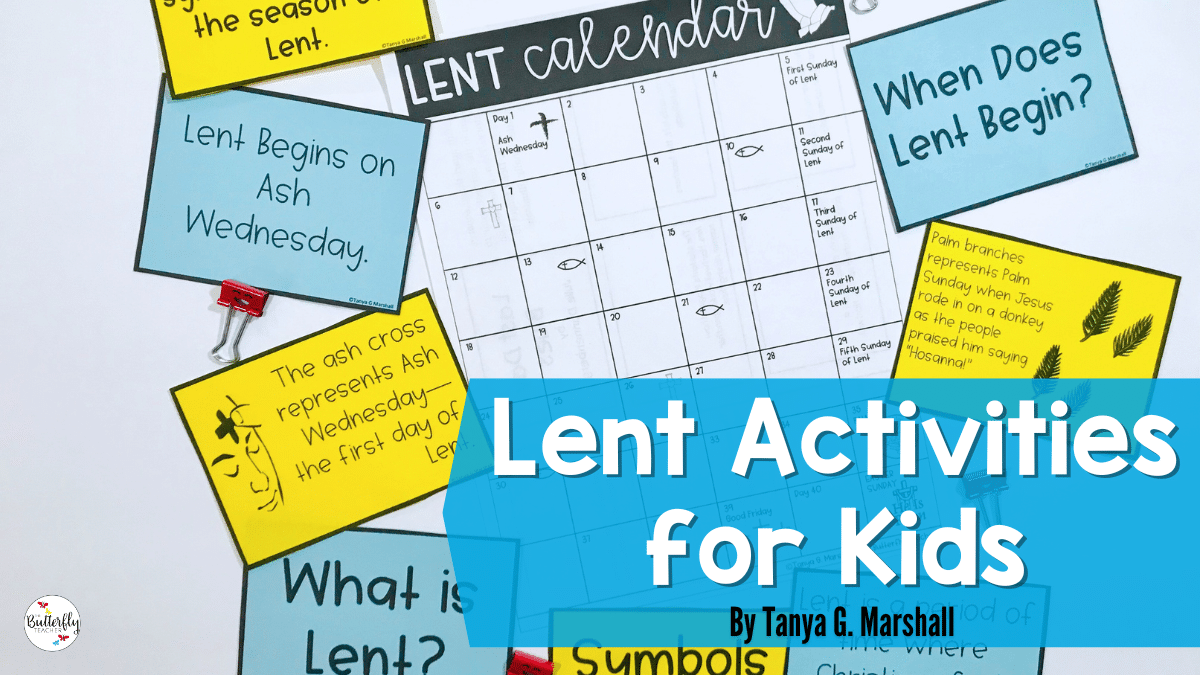
- Reusable Lent Calendar
A calendar helps students see the 40-day journey. It gives structure to the season and opens the door for daily or weekly check-ins. - Lent Matching Cards
Matching vocabulary and concepts helps kids move, talk, and process ideas together—without it feeling like a worksheet drill. - Fact & Question Task Cards
These are perfect for centers, small groups, or partner discussions. Kids get meaningful information in bite-sized pieces.

Why This Approach Helps Kids Understand Lent
Upper elementary students crave both structure and purpose. When Lent activities repeat across the season, kids feel confident and connected. Hands-on learning also helps abstract faith concepts feel more real and understandable.
How Can You Teach Lent Vocabulary Without It Feeling Like Memorization?
Lent vocabulary sticks best when students interact with it multiple times in different ways. Instead of memorizing definitions once, kids revisit ideas naturally through games and discussion.
Try rotating these strategies:
- Partner matching games using question-and-answer cards
- Small-group task card discussions
- Independent recording sheets for quiet reflection or accountability
This kind of repetition builds understanding without boredom.

What Are the 3 R’s of Lent, and How Do You Teach Them to Kids?
In kid-friendly terms, the heart of Lent can be understood through reflection, response, and renewal. These ideas connect naturally to the traditional practices of prayer, fasting, and giving without making Lent feel rigid or rule-based.
Here’s how I explain it to upper elementary students:
- Reflection: We take time to think about Jesus’ life and our own choices. This connects closely to prayer, where kids pause, write, and talk with God.
- Response: We choose how we will respond during Lent—sometimes by giving something up or adding a positive habit. This connects to fasting, explained as making intentional choices.
- Renewal: We look for ways to grow and show love to others. This ties directly to giving, through kindness, service, and generosity.

Why This Feels Meaningful for Upper Elementary
When kids are given choices, Lent doesn’t feel forced. Plus, this helps them better understand the “why” behind fasting and sacrifice.
Reflection builds ownership, and students begin to see Lent as something personal—not just another lesson or legalistic activity.
How Do Lent Activities Prepare Kids for Easter?
Lent activities build the background knowledge and heart posture kids need to truly understand Easter. Without that foundation, Easter lessons can feel rushed or disconnected.
Lent naturally sets up:
- The timeline from Ash Wednesday to Easter
- Key vocabulary like sacrifice, resurrection, and redemption
- Understanding important days like Palm Sunday and Good Friday

By the time Easter arrives, students already understand the story—and why it matters.
Frequently Asked Questions About Lent for Kids
How do you explain Ash Wednesday to kids?
Ash Wednesday is the first day of Lent and marks the beginning of the journey toward Easter. I explain it to kids as a reminder day—a day to pause, reflect, and remember that we want to make thoughtful choices as we prepare our hearts.
In class, I keep the focus on why the day matters rather than the ritual itself.
How do you explain ashes to a child?
Ashes are a symbol that remind Christians to stop, think, and turn their hearts toward God. When I explain this to kids, I frame ashes as:
1–A visual reminder to pause and reflect
2–A symbol that encourages kids to grow and make better choices
3–Something meaningful, not scary or sad
Using symbol cards or other visuals helps students understand this idea clearly and without confusion.
Do children receive ashes on Ash Wednesday?
In classroom settings, teachers typically do not give literal ashes to students. Whether children receive ashes usually depends on family tradition or church practice, not school.
As a classroom teacher, I focus on teaching the meaning behind Ash Wednesday rather than the physical ritual. Instead of ashes, I use symbol cards that represent Ash Wednesday to help students understand what the day stands for—reflection, humility, and preparing our hearts for Easter.
This approach keeps lessons respectful, inclusive, and developmentally appropriate, while still helping kids grasp the significance of the day.
How do you explain Lent to little kids?
Lent can be explained as a time to get ready for Easter by practicing kindness, prayer, and thoughtful choices. For younger or more concrete thinkers, I focus on what Lent helps us practice rather than what we give up.
In the classroom, hands-on learning makes a big difference. Playing simple matching games with visual cards helps kids connect Lent vocabulary and symbols in a concrete way.
I also lean into storytelling—sharing short, age-appropriate stories about Jesus’ life gives children context and helps Lent feel like part of a bigger story they can understand.

Can Lent Activities Be Used in Different Settings (Classroom, Homeschool, Sunday School)?
Yes! Flexible Lent activities work beautifully across different learning environments.
- In classrooms, they fit easily into centers or morning work.
- In homeschools, they create a gentle weekly rhythm.
- In Sunday School or Bible study, they support small-group discussion.
That flexibility makes planning so much easier.
What If I Need Secular Easter Activities Too?
Some teachers need Easter activities that focus on the season culturally rather than religiously—and that’s okay.
If you’re looking for non-religious classroom ideas, I’ve shared several fun options in my post 12 Fun and Fresh Easter Activities for Upper Elementary. It’s a helpful companion when you’re planning across different settings.
How Can Teachers Save Time When Planning Lent Lessons?
Reusable, print-and-go activities save time while still keeping learning meaningful.
A few of my favorite time-savers:
- Using one Lent center weekly
- Placing the calendar in morning work or soft start
- Keeping task cards ready for early finishers
Small routines add up to big relief during busy seasons.
Lent Activities for Kids That Actually Stick
Lent doesn’t have to feel heavy or complicated. With the right activities, it becomes a calm, meaningful season that helps kids grow and prepares them beautifully for Easter.
If you’re looking for a way to guide students through the entire journey—from Lent to Easter—using connected lessons, visuals, and activities that build on one another, I’ve found it helpful to use resources that intentionally pair
Lent learning with the Biblical account of Easter so everything flows naturally for kids.
Like this bundle of activities here. ⬇️

Having resources that flow together makes planning and teaching so much smoother. Even starting with just one activity can make a big difference.
Teacher friend, meaningful learning doesn’t have to be hard. Sometimes, it just needs the right structure and a little intention. 🦋

2 Responses
I’m the superintendent of Sunday school at my church and am looking for Lenten Sunday school materials.
Hi Pamela,
That’s great! The Lenten materials mentioned in this post are available for you to use with your Sunday school class. You should be able to click any image above, which will take you to the checkout page for these materials. Thank you and have fun with your Sunday school lessons.
Tanya